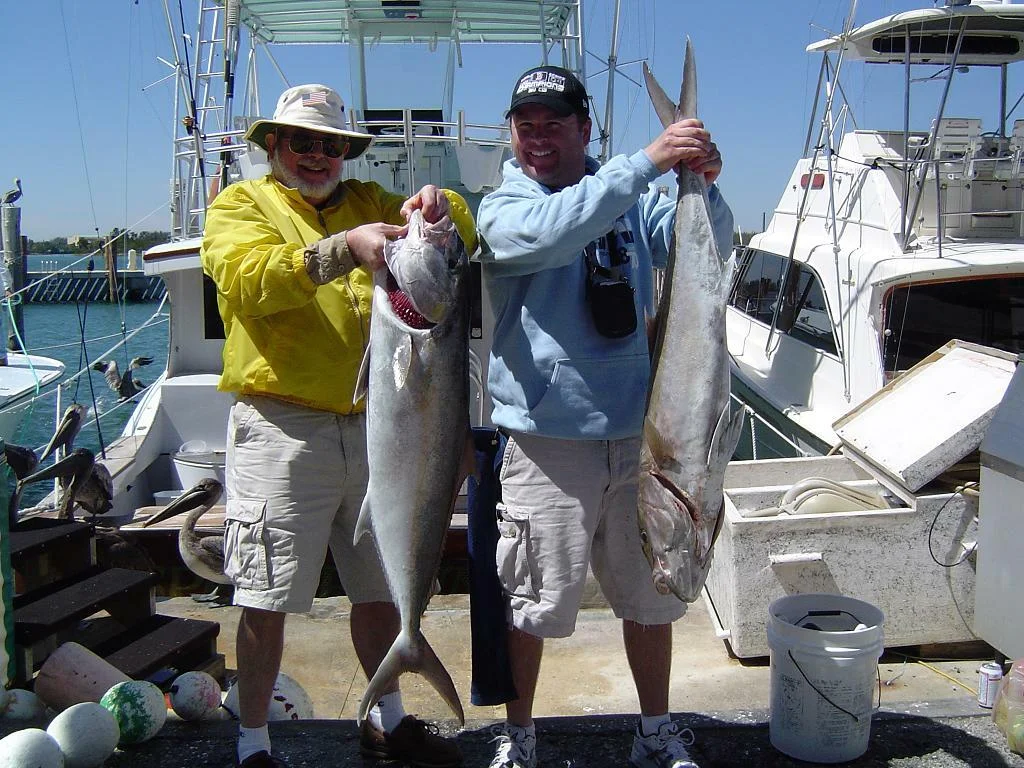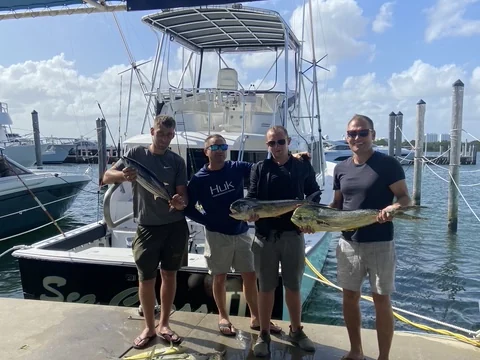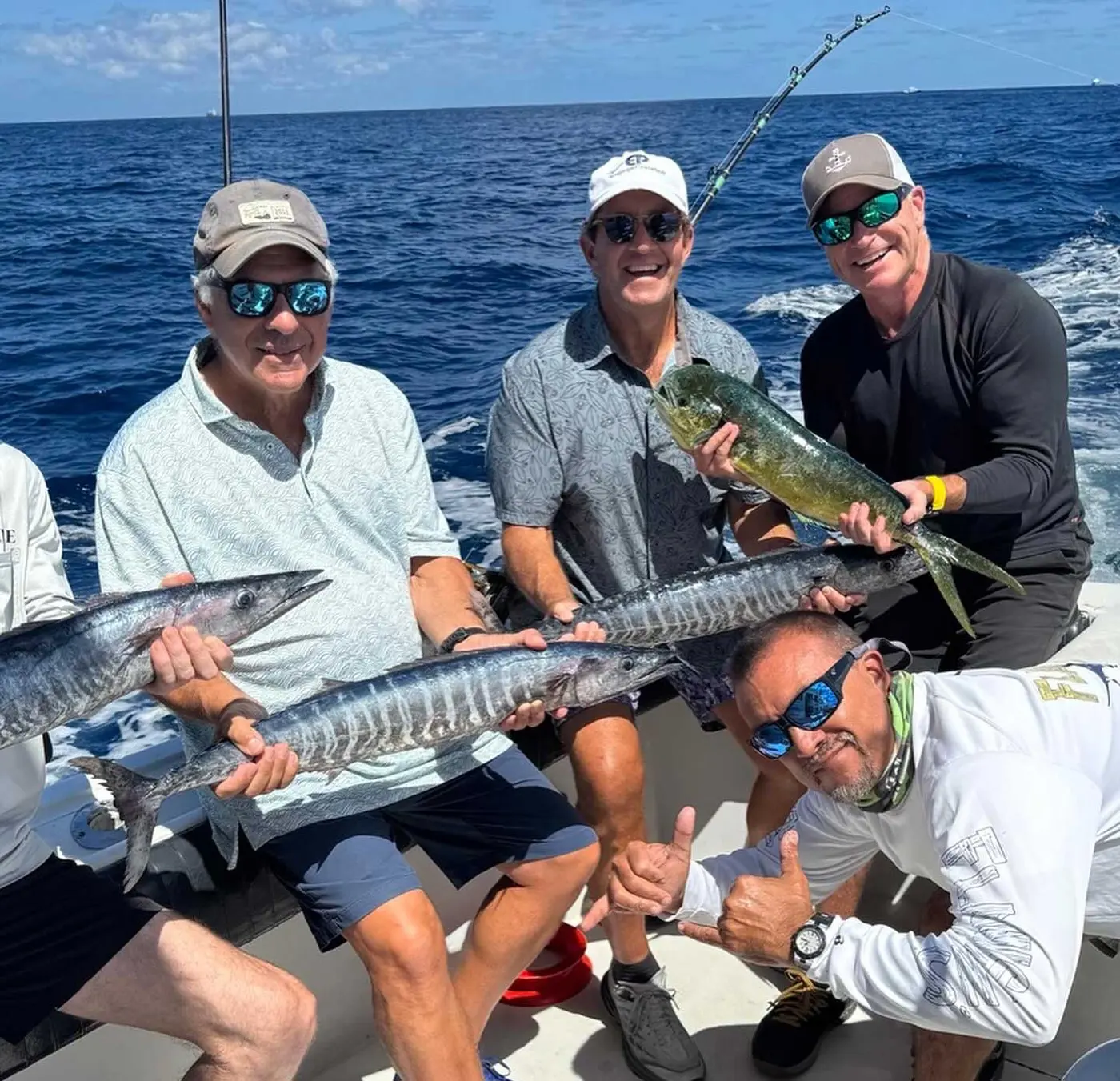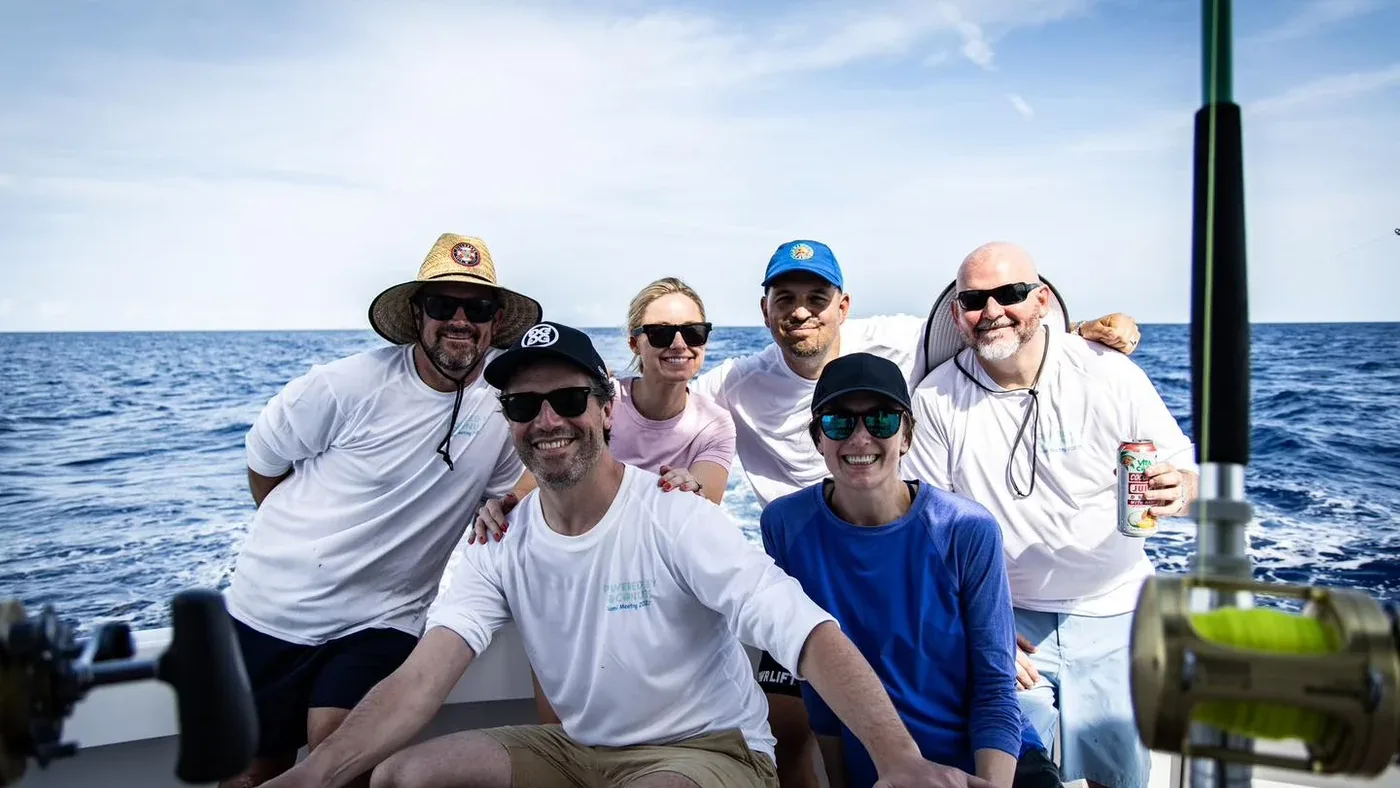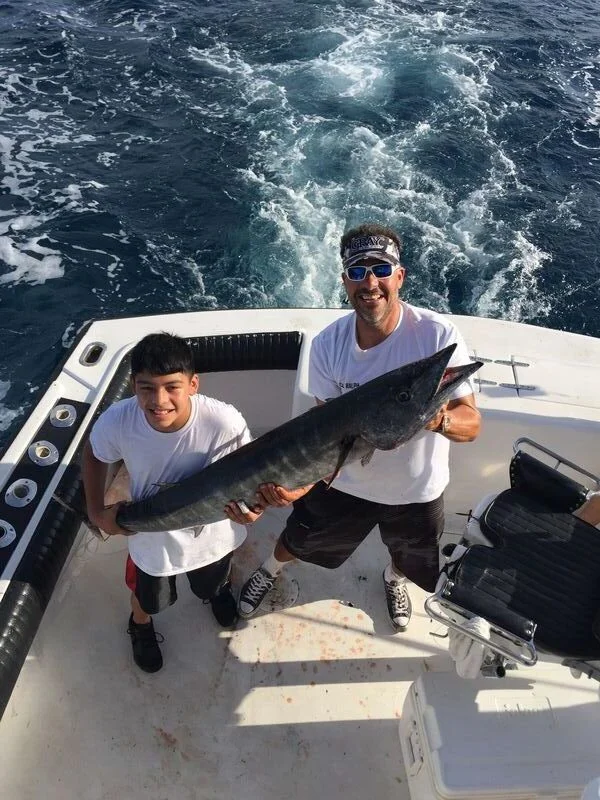
A slow first half hour turned into a dozen mahi under working frigate birds, then a floater gave up a wahoo on the planer bait. Offshore Miami at its best.
A Well Full of Horse Pilchards
We started the morning with a well full of baits. All horse pilchards, and we headed offshore. Good bait is the first decision of any offshore day, and it is the one people pay the least attention to.
Horse pilchards are the large ones, big enough to interest a serious fish without being too much for a mahi to swallow. They swim hard, they flash, and they stay lively in a well all day if the water is kept turning.
Having a full well changes the way you fish. You can throw bait away by the handful without worrying about running short. That freedom is what lets you hold a school beside the boat.
We cleared Haulover early with the wells loaded and the spread ready to go out.
Thirty Minutes of Nothing, Then Birds
After 30 minutes trolling and no bites, I spotted some frigate birds working an area about half a mile ahead of us. I told my mate to get ready. Thirty quiet minutes offshore is nothing to worry about, as long as you are looking in the right places.
Frigate birds are the single best piece of equipment on the ocean. They do not dive, they hover and glide over fish that are pushing bait up from below. A frigate working tight circles low over the water means something is feeding directly underneath.
Two or three birds in a loose group is usually a single fish or a small pack. A cloud of them means a school, and that is when you get the crew standing up.
We turned toward them and got the spread trimmed on the way.
The Left Long Shoots Out of the Rigger
As soon as we came up on the birds, the left long shoots out the rigger and line starts to peel off. Our guests for the day were on with a nice mahi-mahi. That is exactly how it is supposed to work.
An outrigger clip is a beautiful early warning system. The line pops free with a crack you can hear over the engines, and the whole cockpit knows before the reel even starts singing.
The long rigger position sits furthest back in the spread. Fish that come in from behind and below find it first, which is why so many bites happen there.
Everyone was on their feet before the angler even had the rod in his hands.
Pitching Freebies to Hold the School
When we worked the fish close to the boat, the mate pitched out some freebie live pilchards. Before I knew it, the boat was surrounded by green and blue neon fish. That is the moment that makes a summer or winter offshore trip.
Mahi are herd animals and intensely competitive. A hooked fish will not leave, and the rest of the school stays with it. Feed them free bait and they forget the boat entirely.
The rule is simple. Never take the last hooked fish out of the water until the next one is on. Break that chain and the school disappears.
After catching about a dozen mahi-mahi the action slowed and we began trolling again.
Why Mahi Light Up Green and Blue
The color change people see beside the boat is real and it is fast. A feeding or excited mahi turns electric green, blue and gold, and a tired one fades to a dull yellow within seconds of hitting the deck.
Those colors come from cells in the skin that the fish controls directly. Nobody catches one without commenting on it. It is the reason mahi photographs never quite do the fish justice.
They grow at an absurd rate too, which is part of why the fishery holds up under pressure. A fish can go from an inch to a gaffer in under a year.
They are also outstanding eating, which is a rare combination with a fish that fights and looks like that.
Watching a school light up under the transom is the reason people book this trip twice. The water turns into moving neon for as long as you keep feeding them. I have seen guests forget to reel because they were staring over the side.
Finding a Floater Worth Fishing
It was not long before we spotted a nice floater. Any piece of flotsam offshore is worth a look, because the ocean out there is mostly empty and anything solid becomes a neighborhood.
Small bait gathers under it for shade and cover. Small predators follow the bait, bigger ones follow them, and within weeks a single pallet is holding a food chain. The longer it has been floating, the better it fishes.
Weed lines work the same way on a larger scale. Sargassum stitched together by wind and current builds an entire floating habitat that holds mahi, wahoo, tuna and tripletail.
The Miami deep sea fishing calendar explains how the weed lines form and when they matter most.
The Planer Bait Gets Nailed
We trolled by the flotsam with several surface baits and a planer. The planer bait got nailed and the rod was screaming. Awesome! We were hooked up again, and this definitely was not a mahi-mahi.
You can tell within two seconds. A mahi jumps and runs sideways, while this fish just went, straight and deep and fast. That is the signature of something with a different set of plans.
After a 10 minute battle, we gaffed a nice wahoo and swung him into the box. Surface baits raised nothing at that floater. The fish was sitting underneath in cooler water, exactly where a planer puts your offering.
What an awesome trip offshore fishing in Miami. I love it here.
What the Crew Handles While You Fish
On a day like this one the mate is busier than anybody. He rigs baits, clears lines when a fish runs, pitches freebies, works the gaff and keeps the deck safe while six people move around it.
My job is the wheel and the water. Watching birds, reading current, positioning the boat on a school and backing down when a fish takes line. Guests should never have to think about any of that.
That division of labor is why beginners do fine out here. You hold the rod, listen to the mate, and the rest is handled for you.
Our Miami Beach fishing charters run with a full crew on every trip, and the boat is yours alone for the day.
Late Winter Offshore Off Miami Beach
Late February gets overlooked for offshore work because everyone is focused on sailfish. That is a mistake. Mahi rate as high as they get in February, and wahoo are right there with them.
Cold fronts are the engine. Each one pushes through, stirs the water, and puts bait on the move, and the predators show up behind it. Forty-eight hours behind a front is often the best window of the month.
The Gulf Stream sits close enough to shore here that we reach genuine blue water quickly even in winter. That is a real advantage when the weather only gives you a short window.
Our Hatteras sportfishing charter fleet handles a winter chop well enough to make those runs comfortable.
This Is Why I Love It Here
A dozen mahi and a wahoo in one morning, a half mile of ocean and a few birds doing the hard work for us. Days like that are the reason I have never wanted to fish anywhere else.
The people on board mattered as much as the fish. Watching guests go from quiet to shouting inside of ninety seconds never gets old for me.
All of our deep sea fishing charters are private, so this kind of morning belongs to your group alone. Nobody else is standing in the cockpit waiting for a turn.
Tight lines and stay safe, Capt. Ralph
Sea Cross Sportfishing, Miami Beach
Fish The Same Water
Capt. Ralph runs these trips out of Bill Bird Marina at Haulover Park. Call (305) 773-2282 to talk dates with Capt. Ralph, or browse the rest of the Miami fishing reports from the log.