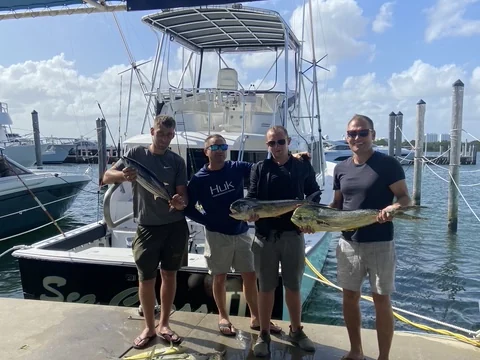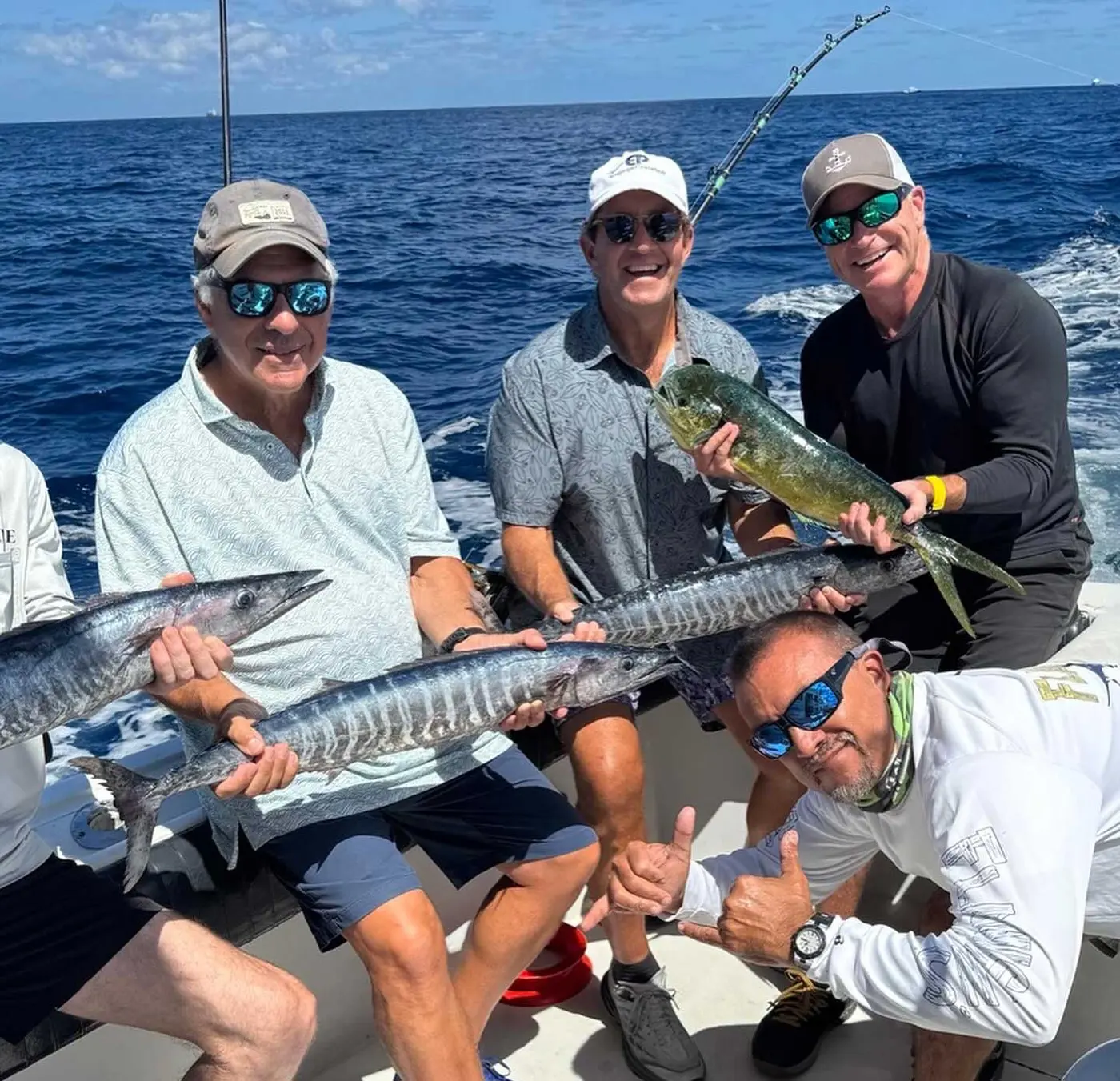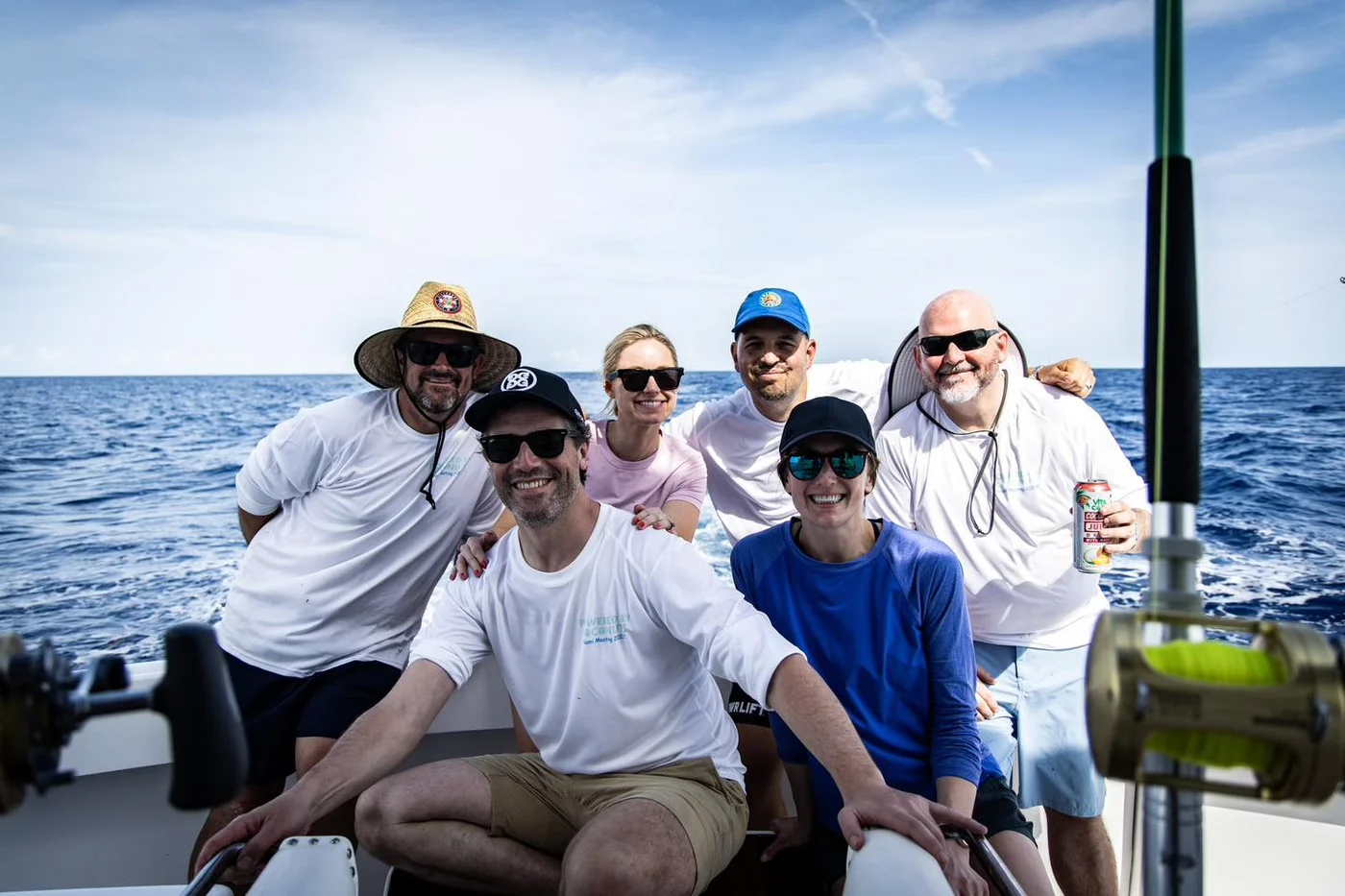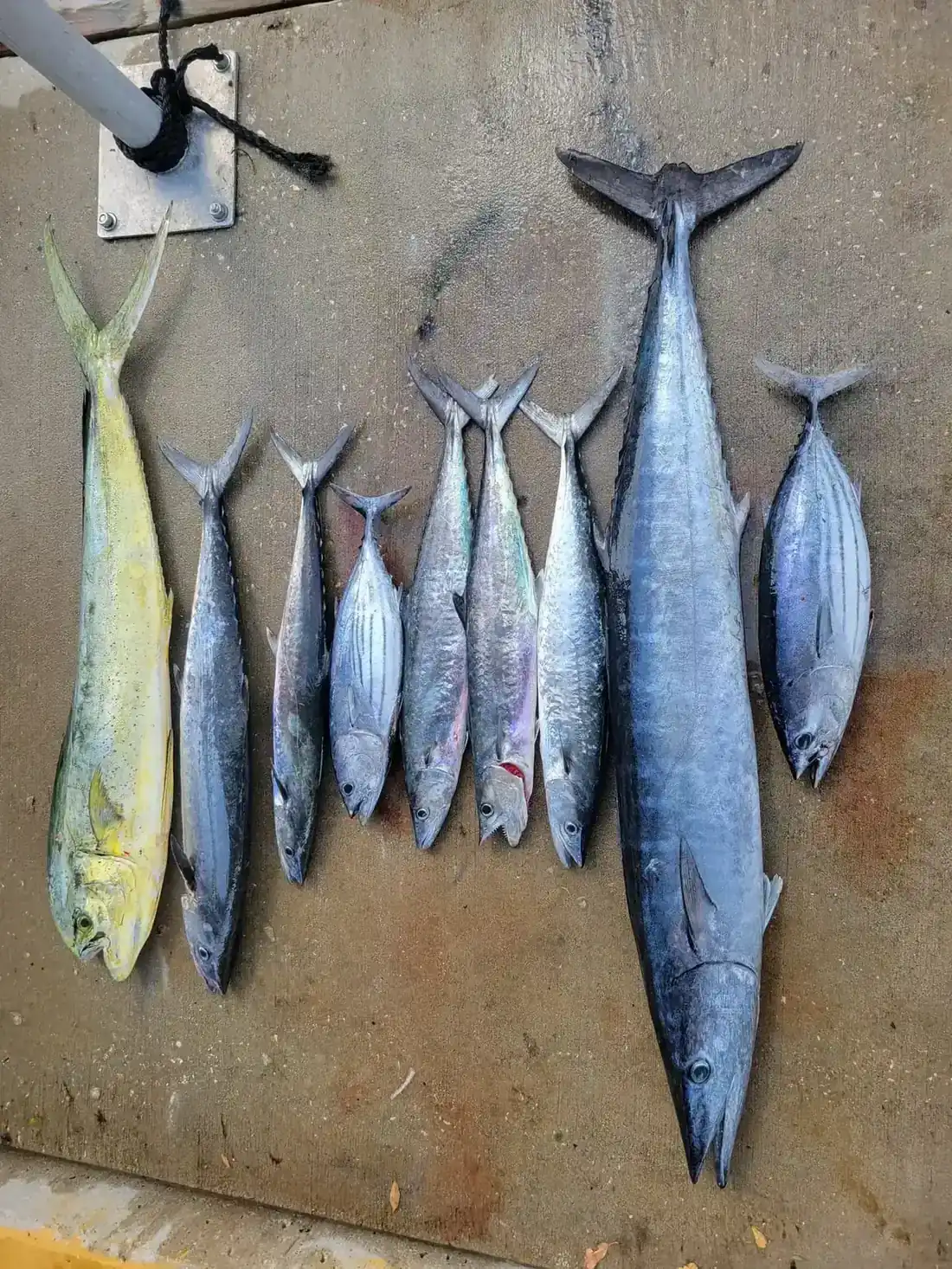
Two billfish, one trip. A sailfish twenty minutes into the first drift, then a swordfish at 1,100 feet after an hour long fight in the dark.
A South Florida Billfish Slam in One Trip
This time of year offers a great chance to be able to complete a South Florida billfish slam. That means a swordfish and a sailfish in the same trip. Here in Miami we have a good shot at success.
Very few places on earth let you do that. It works here because the Gulf Stream runs close to the beach, so the sailfish corridor and the deep swordfish grounds sit within the same afternoon.
The timing is the trick. Sailfish are a daylight fish along the edge, and swordfish come alive as the sun goes down in far deeper water.
Stack those two windows back to back and you have a shot at both.
Starting at One in the Afternoon
We started out that day at one in the afternoon to get some baits for the night ahead. Bait comes first on a trip like this, because a swordfish drift with poor baits is a waste of a beautiful evening.
Fresh dead baits are my preference for swords. Tinker mackerel and blue runners are both good choices, and keeping live fish in the well means you can pick what looks best when the time comes.
Where there is bait there is billfish. That is true on the edge in the afternoon and it is true in 1,100 feet after dark.
We had a couple of hours of daylight to use, so we used them.
Why Swordfish Live Where They Live
Swordfish are built for deep, cold, dark water in a way almost nothing else is. They hunt squid and fish far below the surface and they tolerate conditions that would shut down most predators.
This is one of the places Atlantic swordfish spawn. That is not luck for us, it is the reason a boat can leave Miami Beach and reach real swordfish water in a few hours.
After sunset they climb toward the surface to hunt, and that is the only reason an evening drift works. During daylight they stay deep and require entirely different methods.
Knowing that rhythm decides when you leave the dock and when you set the first drift.
Twenty Minutes Into the First Drift
As I got in position, Alex set the lines and started the first drift. After 20 minutes Daryl was on with his sailfish, a nice trophy fish. You do not often get rewarded that quickly.
Drifting lets the current carry a spread of baits through the zone without engine noise. On the edge in the afternoon it is a quiet, efficient way to fish while the boat rests before a long night.
Getting in position is the part that takes judgment. You want the drift to start up current of the stretch you intend to fish so the baits arrive naturally.
Alex has set lines on this boat for years and he does it the same way every time.
That Fish Is All Over the Place
Alex told Darryl that fish is all over the place. Darryl screamed in, and 30 minutes later we boated the first of the two billfish. Sailfish do not fight in a straight line.
They jump, they change direction, they run at the boat and they tail walk across the surface. An angler has to keep winding through all of it, because slack line is how these fish come off.
Thirty minutes is a respectable fight for a sailfish. It leaves an angler with sore arms and a permanent memory.
One billfish down, one to go, and the sun was still up.
Getting the Rods Ready for Swordfish
Later on, about 4:45 in the afternoon, we started to get the rods ready for swordfishing. That is a complete change of tackle, depth and mindset from what we had been doing an hour earlier.
Swordfish gear is heavy. Big conventional outfits, large spools of heavy line, weights to get baits down and glow lights to draw attention in black water.
The run to the grounds takes time. We work well offshore of the reef into water where the bottom falls away toward the deep trench.
Everything gets rigged before dark, because fumbling with leaders by flashlight helps nobody.
Out to 1100 Feet for the First Bite
On our first drift we waited and waited. By the time we got to 1,100 feet we finally got our first bite. Get ready, I told Darryl, as the reel came tight.
After 30 seconds he got off. That happens with swordfish more often than anyone likes. The bill is hard, the mouth is awkward, and a hook that is not buried properly will simply fall out.
Patience is the price of admission. A drift can run two hours with nothing at all, and the temptation to move constantly is the biggest mistake people make.
At the same time, a drift that is genuinely dead should be reset. Knowing which is which is the job.
Reset Up Current and Hooked Up Again
I reset the drift in the same area up current and got the bite 15 minutes later. After a one hour fight we got a nice 100 pound fish boat side. That is a slam.
Resetting in the same water was deliberate. A bite means a fish is there, and swordfish do not leave a productive area quickly. Moving somewhere new would have been throwing away information.
An hour on a swordfish in the dark is long work. They dive, they sulk, they make repeated runs, and every bit of line comes back one crank at a time.
When the leader finally showed in the lights, the whole boat went quiet for a second.
A hundred pound swordfish is a serious fish anywhere in the world. Getting one after a sailfish earlier the same day is the kind of evening that keeps people talking for years. Darryl had every right to be pleased with himself.
Tackle for Deep Water Swordfish
Swordfish gear has almost nothing in common with what we use on the reef. Everything is oversized because the fish are heavy, the depths are extreme and the leverage is all on their side.
Night drifts use heavy conventional outfits with large spools of heavy line. Weights carry baits down, and glow lights help a fish find an offering hundreds of feet down in the dark.
Daytime swordfishing is a different operation again. Those fish feed near the bottom in water approaching 1,800 feet, and reaching them takes electric reels and very specialized rigging.
Both styles are supported on our sportfishing charter fleet, which carries the tackle and the electronics these trips demand.
Why November Produces Both Fish
November is when this becomes realistic. The fall run of bait has crested, sailfish are arriving on the front edge of the winter season, and the odds improve with every cold front.
At the same time, the heaviest breeder swordfish arrive on their winter spawning run. The biggest fish we see usually come between now and late February.
The catch is weather. Rising winter wind cuts down how often a boat can make the long night run. Being flexible with your dates is the difference between getting the shot and missing it.
The Miami deep sea fishing season calendar shows how those two windows overlap through the winter.
If You Want to Go Swordfishing
A slam attempt is a long day and it is not for everyone. If you want it, say so at booking and we will build the trip around the two windows rather than trying to squeeze it in.
Our full day charters are the starting point, and we adjust the departure and return times to match the drift you are after.
If you want to go swordfishing, call me at (305) 773-2282. There is more background on my Miami Beach charter captain history if you want to know who is running the boat.
Tight lines and stay safe, Capt. Ralph
Sea Cross Sportfishing, Miami Beach
Fish The Same Water
Capt. Ralph runs these trips out of Bill Bird Marina at Haulover Park. Call (305) 773-2282 to talk dates with Capt. Ralph, or browse the rest of the Miami fishing reports from the log.