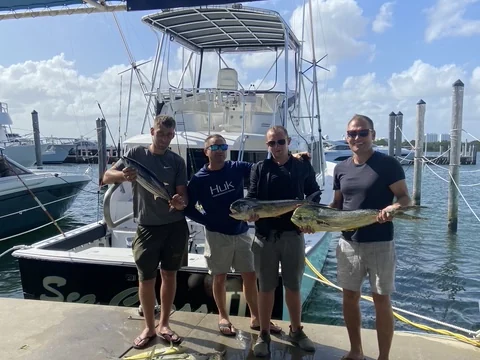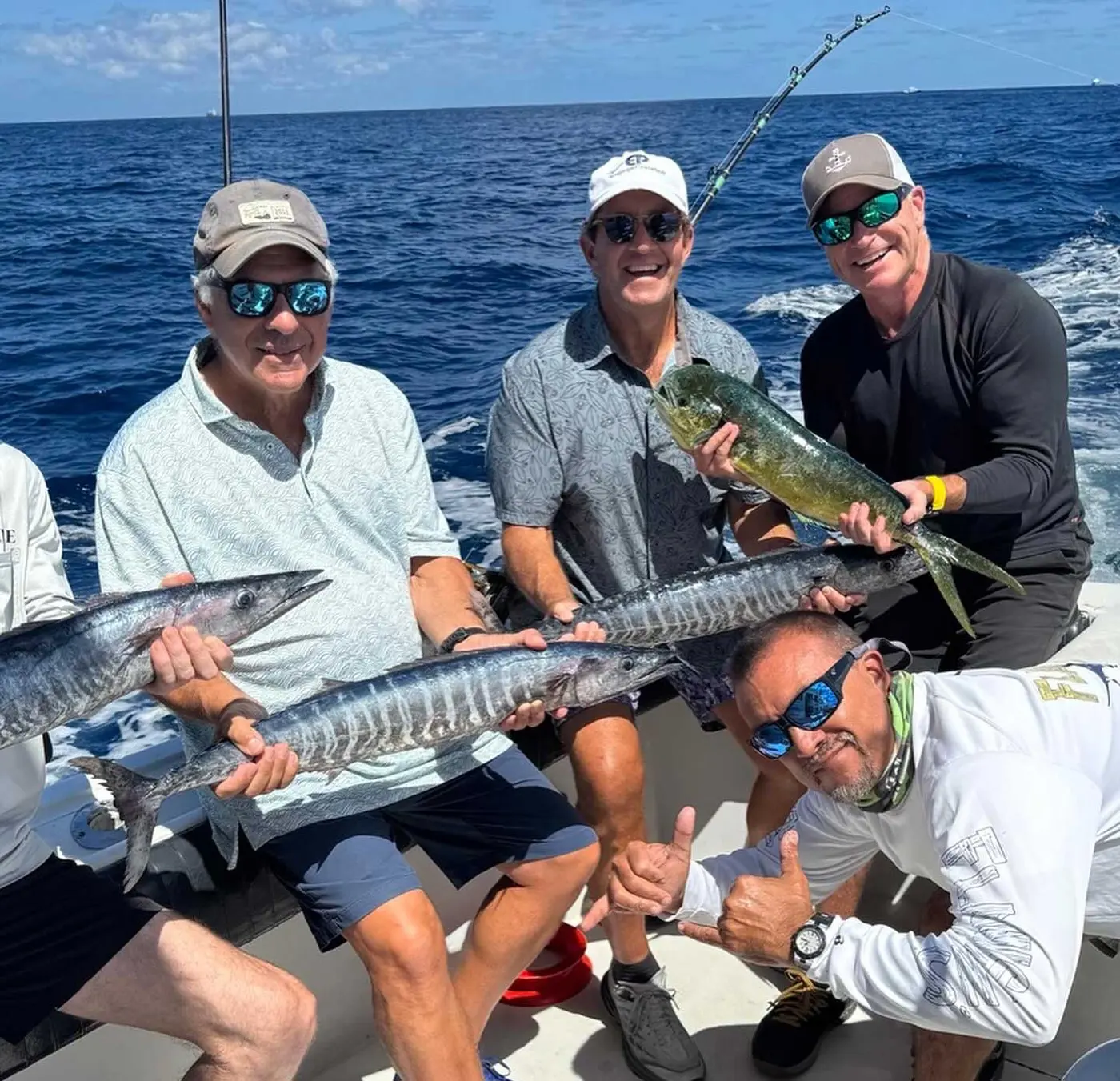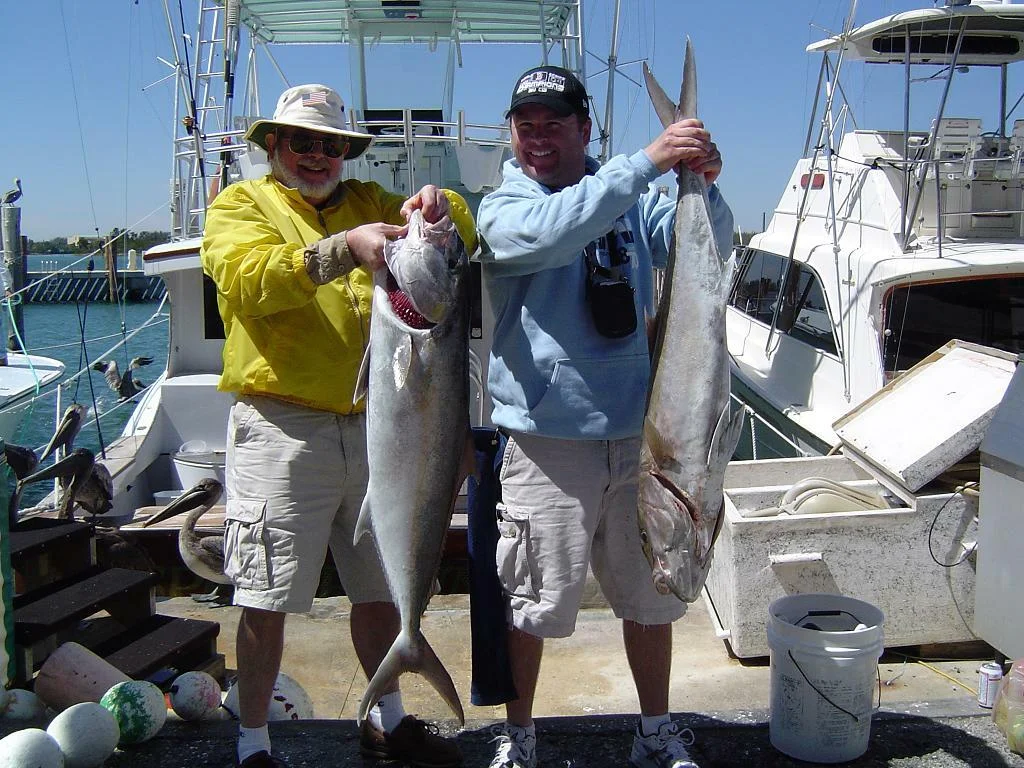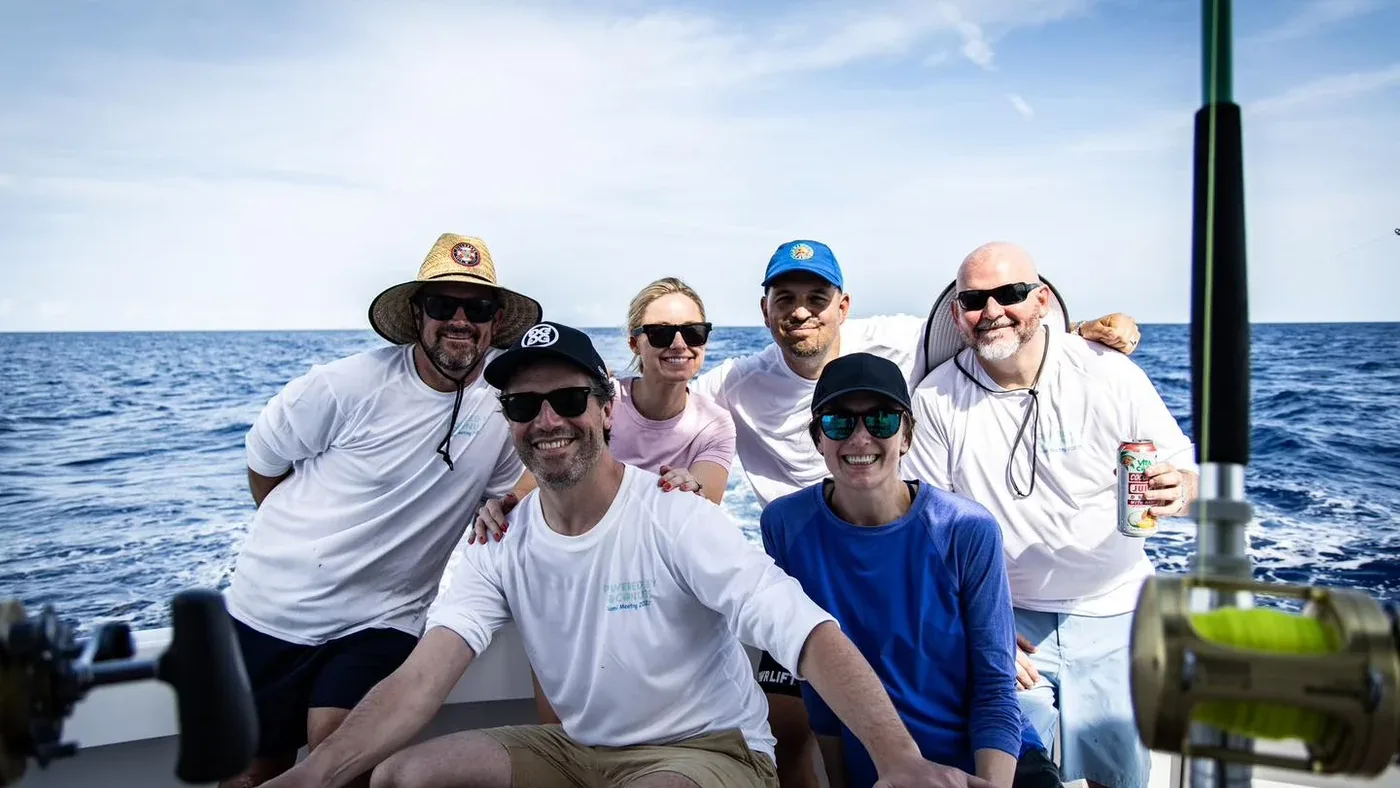
We ran out to the trench at 3:30 and set the first drift before dark. Just before seven, a balloon started moving against the current.
Daylight Savings Gives Us a Better Shot
Wow, finally daylight savings is here. That gives us a better chance to go swordfishing and still be able to catch some sleep in the same night.
Earlier darkness is a gift on this fishery. In summer you are waiting until nine for the light to go, which puts you at the dock well past midnight and ruins the next day.
In December the sun is down before six. You can fish the prime evening window, run home and still be in bed at a reasonable hour.
That one change makes winter swordfishing practical for people who have to work in the morning.
A Nineteen Mile Run Out to the Trench
As we headed out it was 3:30, plenty of time to get out there. It is a 19 mile run out to the trench. That short run is the reason this fishery exists off Miami Beach.
Nineteen miles is nothing compared to what most ports would need to reach water that deep. The bottom falls away quickly here, so the deep ground sits far closer to the beach than people expect.
The ride out is a good time to get rods rigged and leaders checked. Doing it at the dock is better still, but the run gives you a second chance.
We had the whole afternoon ahead of us and no reason to hurry.
First Drift Before 5:30
As I finally set up the first drift it was not even 5:30. The sun was still shining, and I was hoping to get that first strike before dark.
Getting the drift established in daylight is the right way to do it. You can see your line angles, check your spacing and confirm the direction the boat is tracking before you lose the light.
A daylight strike is a long shot, but it happens. Swordfish do feed before full dark, particularly on an overcast evening or in stirred up water.
Mostly you are setting the table for the hours after sunset.
Current Slicks Everywhere
As the sun set I knew I was in good water. There were some current slicks everywhere. A slick is a smooth band on the surface where the water texture flattens out, and it means two currents are meeting underneath.
That is exactly what you want. Where currents converge, bait and organic matter collect along the seam, and the whole food chain lines up on it.
Reading those signs at last light is one of the small pleasures of this work. The ocean tells you a great deal if you are paying attention.
As dark set in there was still no bite, but I was not worried.
The Balloon Moved the Wrong Way
It was almost seven when I noticed that the 300 pound rod's balloon was heading the opposite way, against the current. That is the detail that made this trip.
A balloon float keeps a bait suspended at a chosen depth and shows you, visibly, what that bait is doing. Everything in the spread should drift together with the water.
When one float starts travelling against the current, nothing natural is causing it. Something has the bait and is swimming off with it.
That is when I told my father in law John to start winding as fast as he can.
Two Hundred Yards in Thirty Seconds
Then he came tight, and that fish took off at least 200 yards of line in 30 seconds. There is no preparing anybody for that the first time they feel it.
A swordfish that decides to run simply goes. The drag screams, the spool shrinks alarmingly fast, and the angler holds on and does what he is told.
The important thing in those seconds is to do nothing clever. Do not touch the drag, do not try to stop it, just keep the rod up and stay in position.
Line comes back later, a crank at a time, once the fish makes its mistake.
The reel matters enormously on a run like that. A large spool of heavy line gives you room to absorb the first burst, and smooth drag is what keeps the hook from tearing free when the fish turns.
An Acrobatic Dance Beside the Boat
At one point the fish jumped up out of the water, displaying an acrobatic dance right next to the boat. After a forty-five minute battle we had a nice swordfish boat side.
Swordfish jumping in the dark, lit by the cockpit lights, is one of the great sights in fishing. Most people never see it, because most people are asleep at that hour.
Forty-five minutes is a fair fight for a fish of that size. Long enough to hurt, short enough that the angler is still standing at the end.
John earned that one and nobody on board was going to argue otherwise.
Why Floats Matter on a Drift
A swordfish spread is built around depth control. Baits get staggered through the water column, and floats are what hold each one where you put it.
Without a float, a weighted bait drifts wherever current and line angle carry it. With one, you know a bait is at a given depth and staying there through the drift.
They also serve as strike indicators, which is what mattered on this trip. In the dark, a float behaving oddly is often the first sign of a bite.
Our Hatteras charter fleet carries the heavy conventional tackle, weights and lighting these drifts demand.
Sailfish and Swordfish in the Same Month
December is peak sailfish season along this coast, and it is also when the big swordfish arrive. Two billfish fisheries running at once, in daylight and in darkness.
Cold fronts drive the sailfish side of it. When the wind swings north and pushes against the Gulf Stream, the swell stands up and the fish ride it south while staying high in the water column.
The same fronts complicate the swordfish side by making the long night run uncomfortable. You end up watching the forecast for a gap between systems.
Hit that gap correctly and you can do both within a few days of each other.
What to Bring on a Night Trip
Night trips need different packing than a morning charter. It gets colder offshore after dark than anyone expects in Florida, even in a mild winter.
Bring a warm layer and a windbreaker, not just a light jacket. Non skid shoes matter more at night because the deck is wet and you cannot see as well.
Pack real food rather than snacks, since you will be out through dinner and into the evening. A cooler and ice are aboard for whatever you bring.
A headlamp is useful if you have one, though the boat is lit and the crew handles anything technical.
Winter Is Prime Swordfish Time Here
The heavy breeder swordfish reach this coast through the winter on their spawning run. The largest fish of any season tend to come between December and February.
The trade off is weather. Every front that passes takes another night away from the long run offshore, so flexible dates help enormously.
February in particular produces trophy sized fish when the wind allows it. Our Miami fishing season calendar covers how that window behaves.
If one of these is on your list, book early and stay flexible.
Come Catch the Elusive Swordfish
If you would like to catch the elusive swordfish, this is the stretch of the calendar to do it. It is a long evening and a serious fish, and it is worth every hour.
My cell is (305) 773-2282, and I will plan the departure around the drift and the sunset. Our full day fishing charter trips are the usual base, shifted later in the day.
We push off from the docks at Bill Bird Marina, and our Miami Beach deep sea fishing charters reach the deep water faster than most people believe.
Tight lines and stay safe, Capt. Ralph
Sea Cross Sportfishing, Miami Beach
Fish The Same Water
Capt. Ralph runs these trips out of Bill Bird Marina at Haulover Park. Call (305) 773-2282 to talk dates with Capt. Ralph, or browse the rest of the Miami fishing reports from the log.