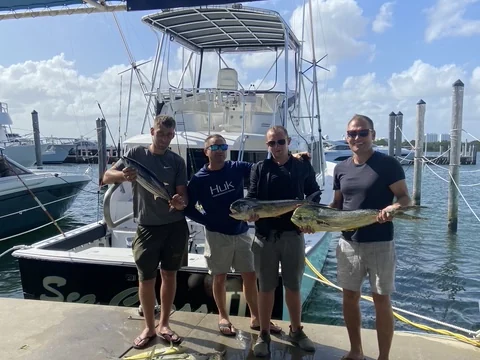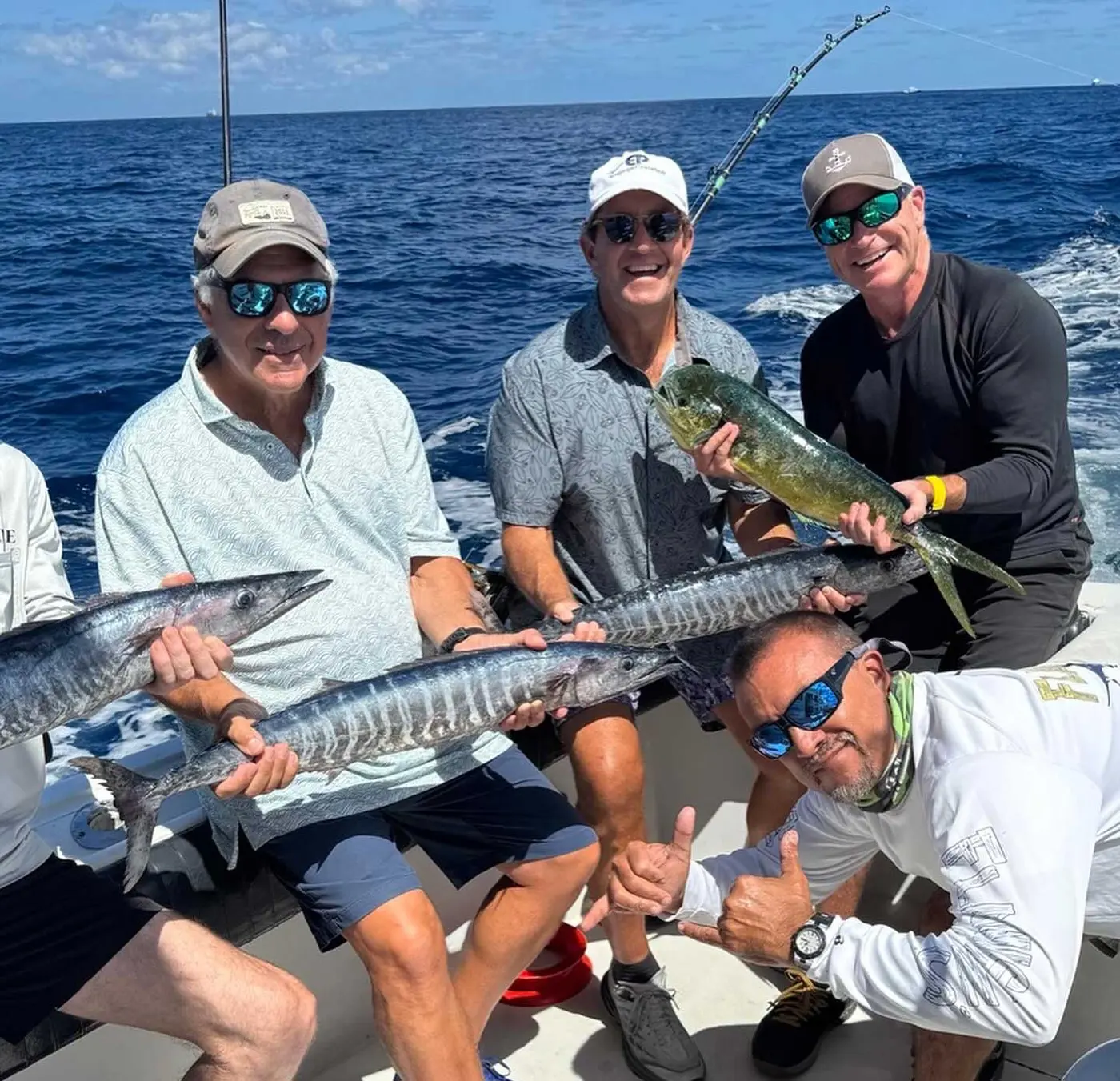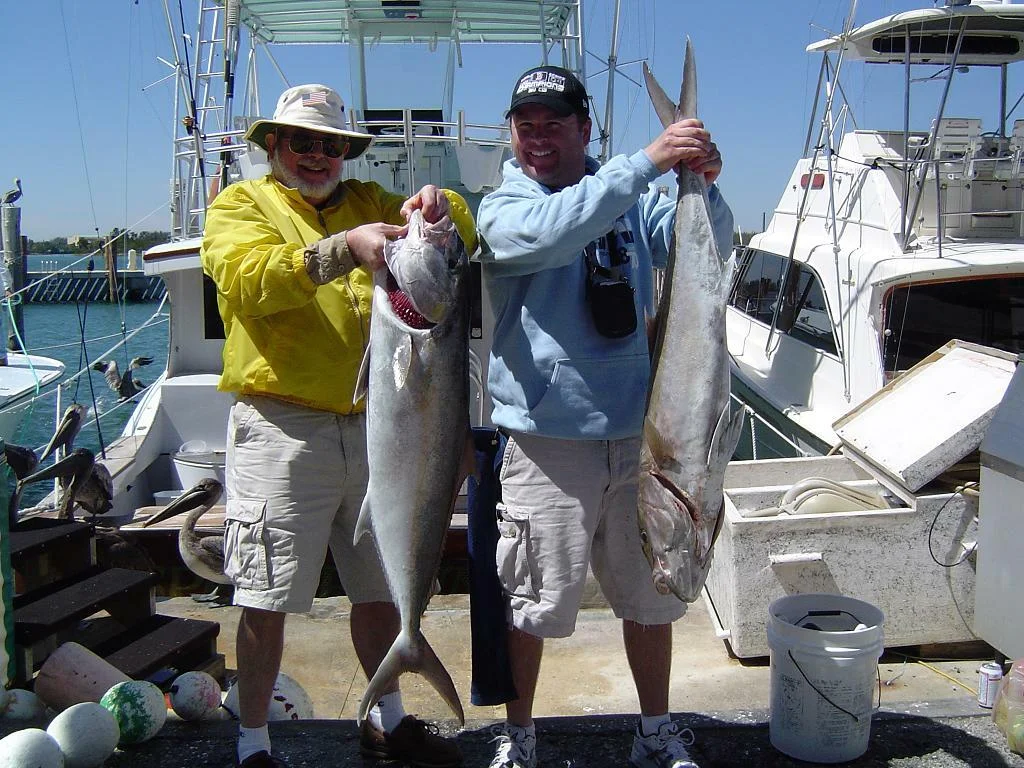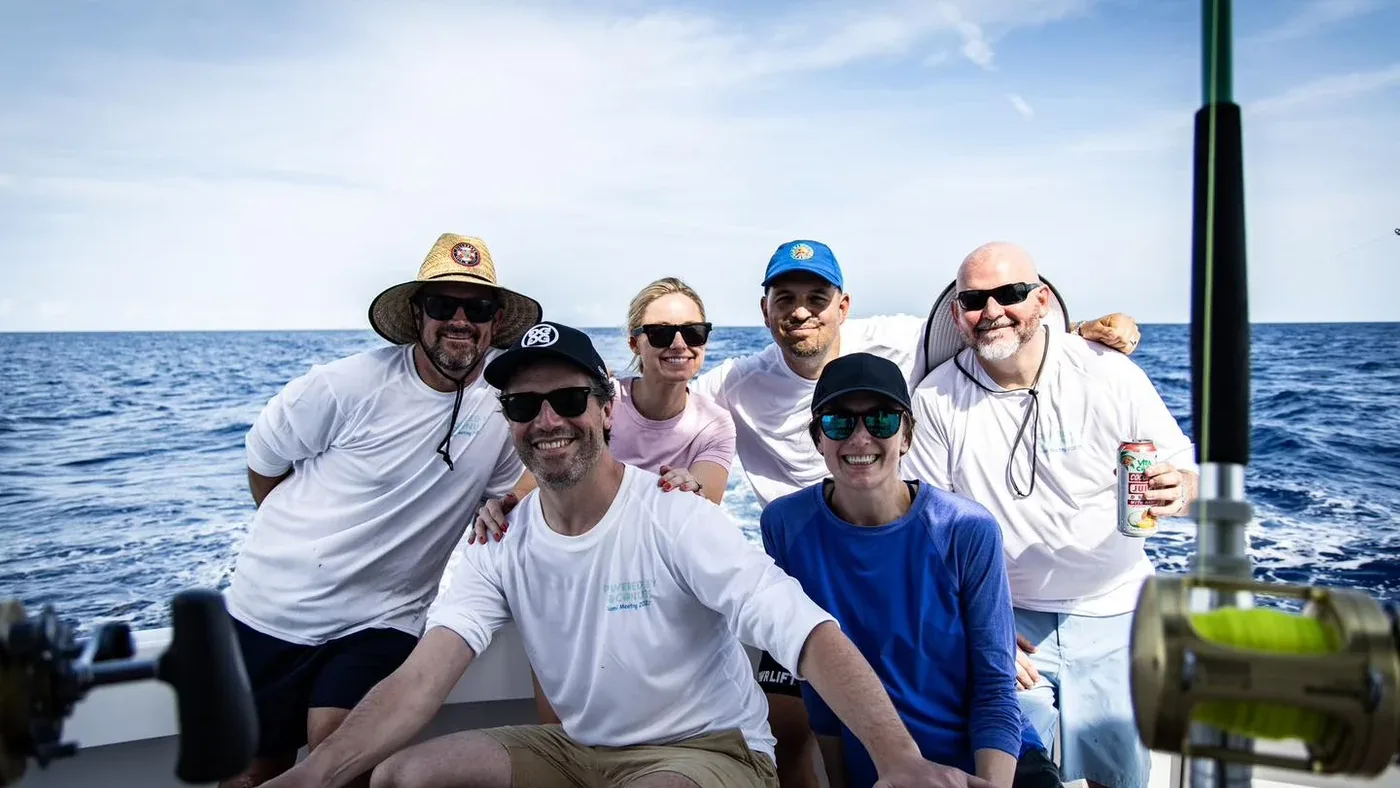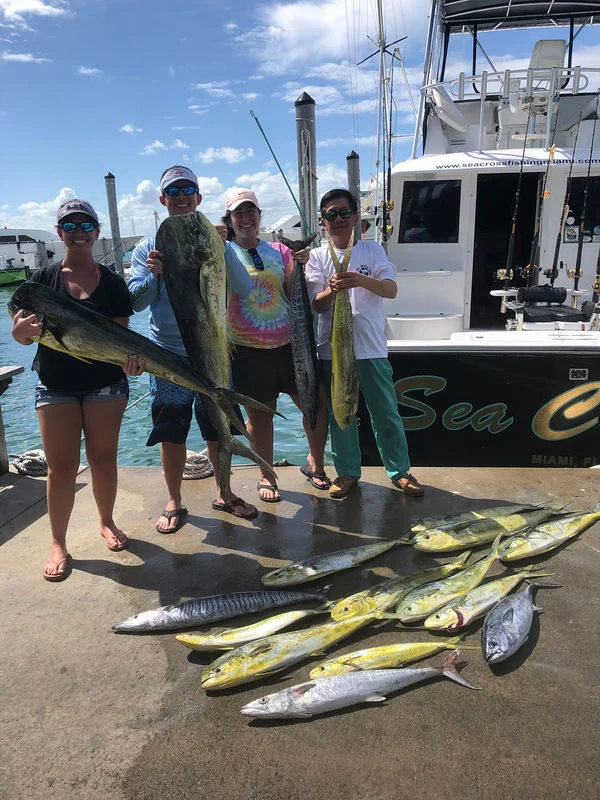
A low pressure system north of West Palm had my customer worried. We fished anyway, moved patch to patch, and put a wahoo and a 30 pound bull in the boat.
A Weather Call The Week Before
Mr. Doan called me earlier in the week because he was worried about the low pressure system just north of West Palm Beach. I told him the weather forecast should be good.
That call happens constantly in the spring. People watch a weather app or a TV forecast and see a system a hundred miles away, then assume their trip is off.
TV forecasts are not a reliable source for sea conditions out here. What matters is the wind direction, the sea state at the inlet and how the current is running, and those are judgments a local captain makes on the water.
The weather was good, so we took off Saturday morning at eight o'clock to go fishing while he was in Miami Beach with his kids on vacation. He had booked a full day charter aboard the Sea Cross.
Running Out To Find The Fish
It took a little bit to get to the fish, as they were at least seven to eight miles offshore. That is further than we often go, and it is exactly why he had booked a full day.
In early April the mahi start moving in numbers, but they are not always close. Some weeks they are on the reef edge and some weeks the good water is well offshore.
You find that out by looking. Water color, weed, birds and temperature all get checked on the way out, and you keep going until the signs line up.
Eight hours gives you the freedom to make that decision. On a short trip you are tempted to settle for water you do not like, because you are watching the clock the whole time.
Once we got out there, we moved around from patch to patch with the spread out. April mahi are often scattered across a wide area rather than sitting on one line, so covering ground matters.
The Spread We Pull For Spring Mahi
Our April spread is built to cover the surface and the depth at the same time, because mahi and wahoo do not feed in the same layer of water.
Up top we run naturally rigged ballyhoo behind small skirts or soft heads. The skirt keeps the bait clean, helps it track straight and sheds weed, which matters when the spring weed lines get heavy.
On the outriggers we run teasers with birds and feathers. They splash and throw water, which raises curious fish from a distance and pulls them into the pattern.
Down deep we run planers on braid. A number eight planer carries a bonito strip about 40 feet under the surface, right through the zone where wahoo and blackfin cruise.
Finally there is the pitch rod, a spinning outfit with a live pilchard ready to throw. It stays rigged all day and it accounts for some of our biggest fish, including the bull on this trip.
All of that gear is standard on both Hatteras yachts in our Miami charter fleet, so we never have to choose between programs before we leave the dock.
The Planer Rod Takes Off
As we trolled and worked from patch to patch, our planer rod took off and one of Mr. Doan's kids reeled in a beautiful wahoo.
Wahoo on a planer is the most common way we catch them here. The planer runs the bait roughly 40 feet down, which is where wahoo cruise, and a strike down there is unmistakable.
For a kid, that first wahoo run is something else. They do not pull like a mahi. They go, and they go fast, and the reel just screams until the fish decides to stop.
April is still solid wahoo water off Miami. They rate very good this month, down slightly from the winter peak but far from over.
The rest of the spread stayed out while that fish was fought. Clearing everything for a single hookup costs you the double, and doubles happen more often than people expect.
Mahi In The 20 To 25 Pound Range
As we kept fishing throughout the day, we were hooking into mahi-mahi in the 20 to 25 pound range. Those are quality fish, not schoolies.
Fish that size fight differently. They run further, they jump higher, and they will test whether your drag was set properly before the trip started.
Spring is when the better mahi show up off Miami Beach. Mahi rate excellent from February straight through the summer, and April sits in the strongest part of that run.
When fish are that size, we slow everything down. There is no reason to rush a 25 pound bull to the boat, and a fish lost at the leader is a fish nobody remembers fondly.
We also kept only what made sense. We really did not want to keep all those beautiful fish, so a number of them went back in the water. Our Miami Beach fishing charters run that way as a matter of course.
A Bull Dolphin Close To 30 Pounds
I noticed there was a bull dolphin nearby, close to 30 pounds. Those big males often hang at the edge of the action instead of competing with the smaller fish.
I instructed Mr. Doan to grab the spinning rod with the pilchard on it. A live pilchard thrown at a single big fish is the highest percentage shot you get in that situation.
He cast to this beautiful fish and it was not long before we boated the trophy. That is how a good day becomes a memorable one.
Keeping a pitch rod rigged and ready is the whole trick. If you have to go find a rod and put a bait on it, the fish is gone.
Bulls that size are easy to identify. The tall blunt forehead and the size difference give them away immediately, and once you have seen one you never confuse it with a cow again.
A live pilchard is the bait I want for that shot. It swims away from the boat on its own, it looks like everything else in the water, and a big bull will run it down without hesitating.
Casting accuracy matters more than distance. The bait has to land in front of the fish and slightly past it, so the pilchard swims across its path rather than away from it.
Why A Full Day Made This Trip
None of this happens on a four hour trip. The fish were seven to eight miles out, we moved patch to patch for hours, and the bull showed up late in the day.
A full day fishing charter runs eight in the morning to four in the afternoon. That is enough time to commit to offshore water, stay with a pattern once you find it, and still fish the reef on the way home.
Bait, tackle, custom rods, reels with fresh line, ice, coolers and Florida fishing licenses are all included.
Spring is the best stretch of the year for variety off this coast, and the month by month ratings are in our Miami deep sea fishing seasons calendar.
Thank you to Mr. Doan and his kids for a great day on the water. Comments from other families who have fished with us are collected in our fishing charter reviews.
Tight lines and stay safe, Capt. Ralph.
Sea Cross Sportfishing, Miami Beach
Fish The Same Water
Capt. Ralph runs these trips out of Bill Bird Marina at Haulover Park. Call (305) 773-2282 to talk dates with Capt. Ralph, or browse the rest of the Miami fishing reports from the log.