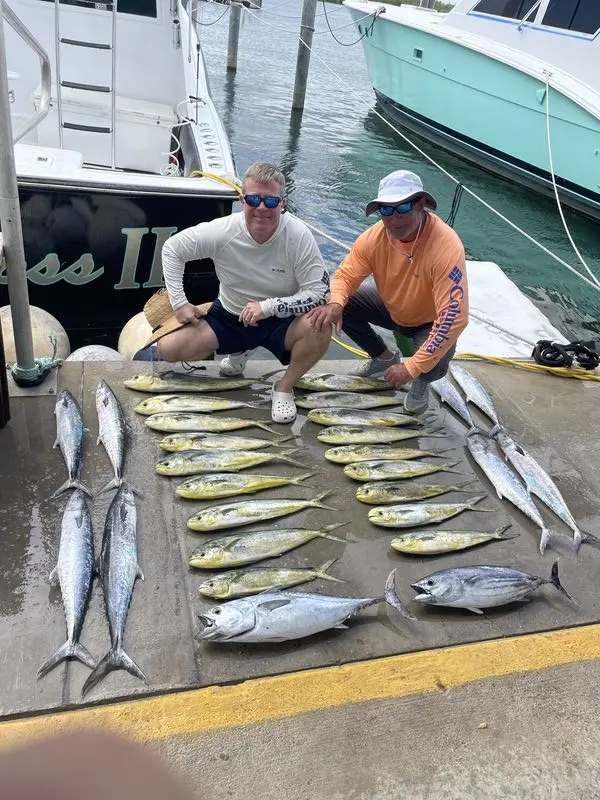
The rainy season is over and the fall run has started. Diving frigates in 800 feet, a floater holding a dozen more mahi, and kingfish waiting back on the reef.
The Rainy Season Is Over And Fall Is Here
The rainy season is over and fall is here. So are the mahi-mahi and the kingfish.
October is a turning point off Miami Beach. The afternoon thunderstorms that define August and September start to fade, the humidity breaks, and the first weak fronts begin sliding down the peninsula.
That change does two things for us. It flattens the seas most mornings, and it starts the southbound bait migration that feeds our entire fall and winter fishery. Blackfin tuna and wahoo both rate excellent this month.
It is also when stone crab season opens on October 15, which tells you everything about how this coast shifts gears. The whole fishery wakes up at once.
Frigate Birds In 800 Feet
We headed offshore this morning with my group looking for mahi-mahi. Once we got to about 800 feet we saw frigate birds diving. We headed over to the area and it was not long after that we were hooked up.
Eight hundred feet of water is maybe six or seven miles off the beach here. On a calm October morning that is a twenty five minute ride, which is one of the real advantages of leaving from Haulover.
Diving frigates mean feeding fish, plain and simple. The birds are picking off the same small bait the mahi are pushing to the surface. When you see three or four of them working a patch of ocean, you get the spread in and get there.
After about an hour of chasing the birds, we found a floater. Anything floating out here holds fish, and a good one can keep a crew busy for a long stretch.
A Floater Worth Another Dozen Fish
We picked up another dozen or so fish off that floater. Three hours into the trip we were already maxed out on mahi.
Working a floater properly is a skill of its own. I do not troll straight over it. I set up down current and work the shadow line, because the fish sit in the shade and face into the flow.
Once we get the first fish hooked, the game changes. Keep that fish in the water next to the boat and the school will stay with it. Then it is spinning rods, pitch baits and steady work until they lose interest.
Schoolie mahi are the fish that make a fall trip fun for a mixed group. They are fast, they jump, they are beautiful in the water, and they are outstanding on the table. A dozen of them fills a fish box quickly.
The color change when they come over the rail is something every first timer reacts to. They light up green and gold and electric blue, then fade within a minute. Nobody forgets seeing it the first time, and it is worth having a camera ready.
Back To The Reef For Kingfish And Wahoo
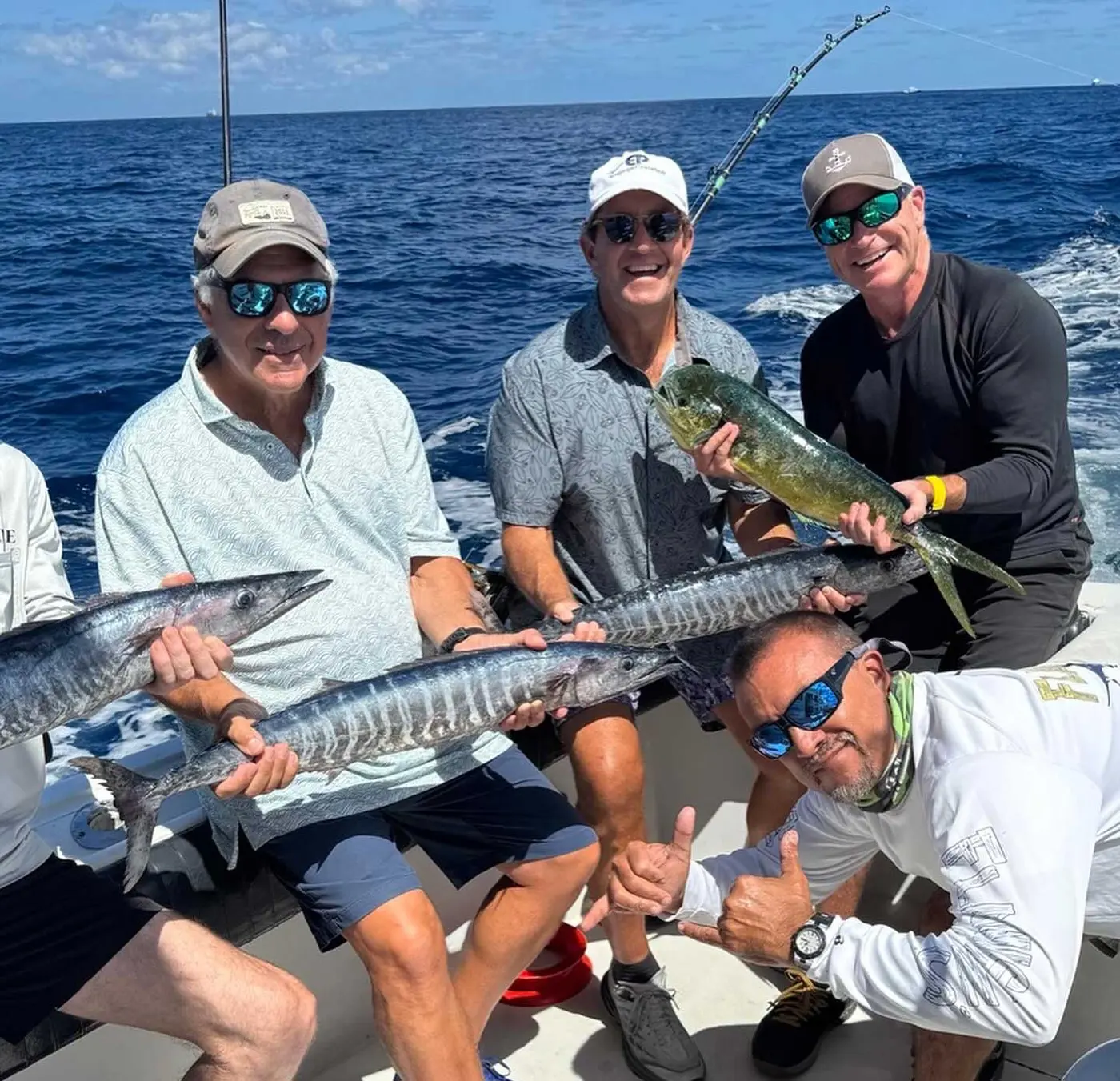
With the mahi handled, we decided to head to the reef and look for kingfish and wahoo. The wahoo were a bit elusive, but I did get a strike on the planer.
That is October in a sentence. The wahoo are around and the numbers climb through the month, but they are not as thick as they will be in November and December. A planer strike that does not stick still tells me they are there.
Kingfish are far more cooperative this time of year. They set up on the reef edge where the bait is pinned and eat all day long. Slow trolled live bait gets the bigger ones, while a planer and a spoon picks off plenty of schoolies.
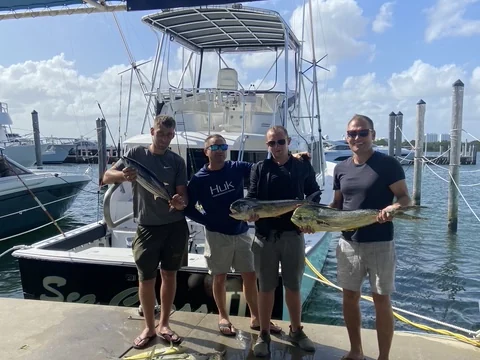
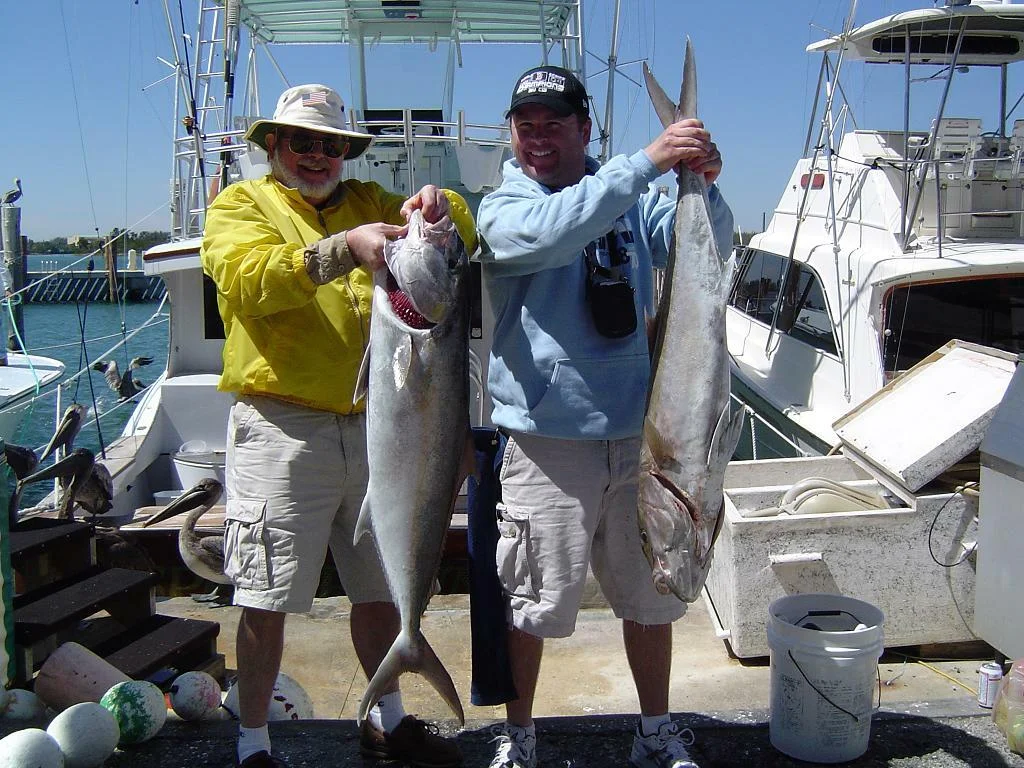
After all, it was a great day: eight kingfish, over a dozen mahi and a few tuna. That is the kind of mixed bag that makes fall my favorite season to fish here. Our Miami deep sea fishing charters run this pattern from October straight through the winter.
Taking Your Catch Home
A day like this one fills a fish box, and mahi, kingfish and blackfin tuna are all excellent on the table. What happens after we tie up matters to most groups as much as the fishing does.
My mate cleans everything at the dock. He will fillet or steak the catch however you want it, bagged and ready to go into a cooler. Bring one if you are staying at a rental or a hotel with a kitchen.
We do not ship fish, so plan for how you will get it home if you are flying out. A lot of visiting anglers take what they can eat that week and release the rest.
Mahi is best eaten fresh, within a couple of days. Kingfish is underrated and excellent smoked or grilled in steaks. Blackfin tuna, bled and iced immediately, is as good as anything you will buy.
Bleeding and icing fish right away is the part most people skip. Every fish that comes over the rail on my boat goes straight into ice water, which is why the quality holds up.
If you want a trophy mounted, tell the mate. Modern taxidermy uses artificial mounts built from measurements and photos, so the fish itself can still be released.
Reading The Ocean On The Run Offshore
Getting to 800 feet is easy. Knowing where to stop is the part that decides the day. I am looking at three things the whole way out.
The first is water color. Green inshore water and deep blue Gulf Stream water meet along a defined line, and that line moves daily with the current. Bait collects on it and mahi patrol it, so I will run parallel to a good color change rather than crossing straight through it.
The second is weed. Scattered clumps mean nothing, but a real weed line with structure to it can hold fish for its entire length. I fish the up current edge and keep the baits out of the salad.
The third is birds. Frigates are the headline, but terns and shearwaters picking at the surface are worth a look too. A single frigate sitting high is worth watching for a few minutes to see whether it drops.
Temperature breaks matter as well. Even a one degree change shows on the gauge and often lines up with the color change. When color, weed, birds and temperature all stack in one place, that is where we fish.
None of this requires expensive electronics. It requires looking at the water instead of the screen, which is the habit that took me the longest to learn and pays off the most.
Planning A Fall Trip Out Of Miami Beach
A day like this one needs hours. We ran offshore, chased birds, worked a floater and then came back inside to fish the reef, and that was three separate programs in one trip.
For that reason I steer anglers toward full day fishing charters in October. Eight hours from eight to four gives us room to commit to offshore water and still have time to fish structure on the way home.
Both boats are set up to switch gears quickly. Outriggers, planers, live wells and fresh line on every reel mean we can go from trolling a weed line to pitching spinning rods at a floater without losing time. Details on both Hatteras yachts are in our Miami charter fleet rundown.
Fall also brings comfortable conditions. Light winds, warm water and flat mornings make it an easy introduction for anyone who has never fished offshore. Recent catches are logged in our Miami fishing reports.
And like we always say, only on the Sea Cross.
Tight lines and stay safe, Capt. Ralph.
Sea Cross Sportfishing, Miami Beach
Fish The Same Water
Capt. Ralph runs these trips out of Bill Bird Marina at Haulover Park. Call (305) 773-2282 to talk dates with Capt. Ralph, or browse the rest of the Miami fishing reports from the log.