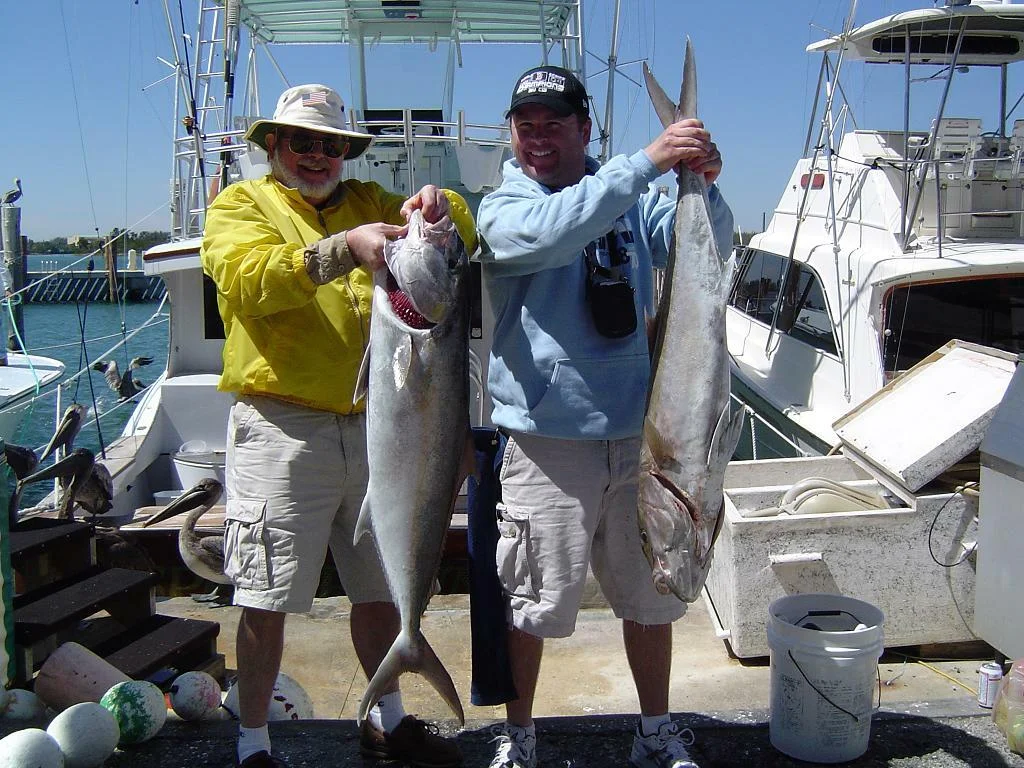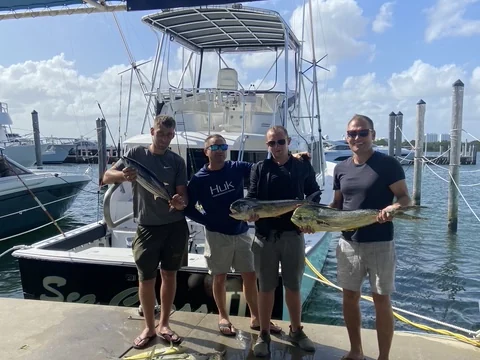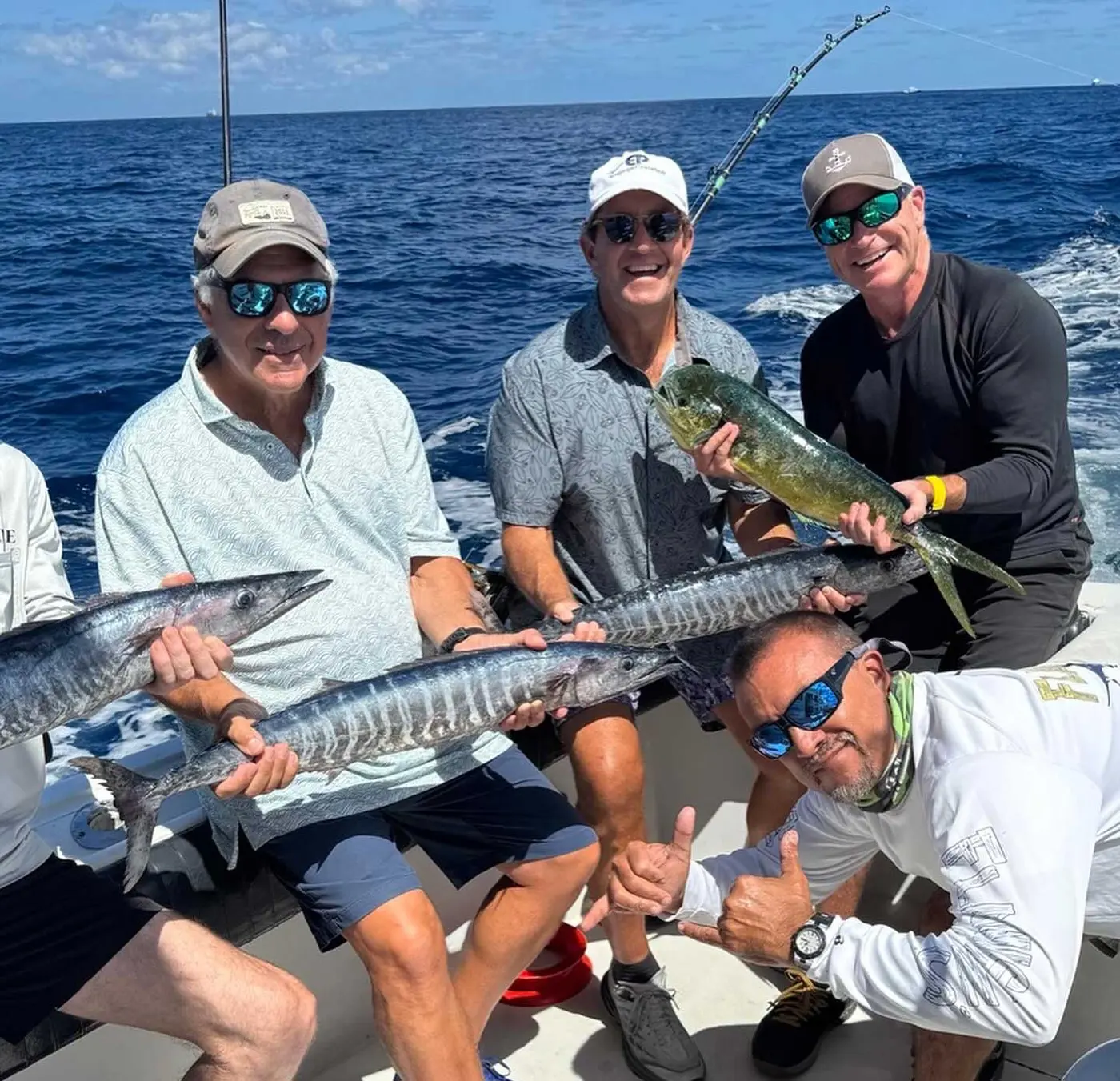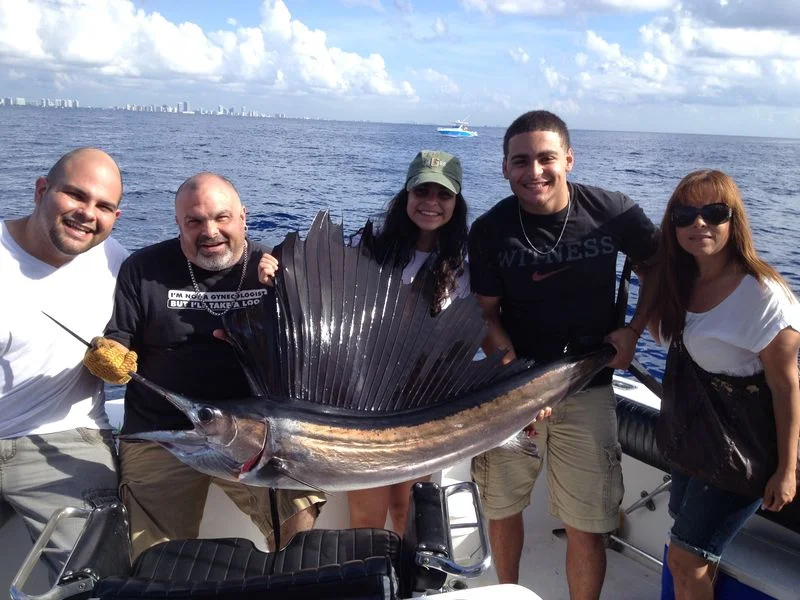
Morning trips out of Haulover Inlet kept producing kings in the 10 to 20 pound class, with bonito everywhere and vermilion snapper on the deep wrecks.
Steady Action on the North Miami-Dade Reefs
Fishing has been great on most half-day charter trips out of Haulover Inlet. There has been a good kingfish bite on the north Miami-Dade county reefs. Our clients have been catching kingfish mostly in the 10 to 20 pound range with an occasional smoker king.
Bonitos are also plentiful on the reef this time of year. We are seeing lots of action on the reefs between 200 feet and 125 feet. Sailfish are also a year round possibility on our reefs.
Nothing about this week was complicated. We ran the same stretch of reef every morning and the fish were there every morning. When a pattern holds like that, the smart move is to leave it alone.
Four hours was plenty of time to work it. Our half day fishing charters put anglers over structure inside twenty minutes of the dock.
Why Bonito Take Over the Reef in Summer
July is peak bonito season along the deeper reefs. They are not a fish anybody puts on a dinner table, but they fight far above their weight class. On light tackle a bonito will humble an angler who thought he was in shape.
The real challenge is getting a bait past them. When a school moves through, everything you send down gets eaten by a bonito first. Heavier baits, faster drops and a change of depth are the usual answers.
I do not treat them as a nuisance with newer anglers. A bonito gives a first timer the pull and the screaming drag they came for. It also teaches them how to work a rod before something more valuable eats.
They make excellent bait too. A fresh bonito strip is one of the better swordfish and kingfish offerings we carry.
What the Reef Edge Looks Like Underneath
The reef off north Miami-Dade is not one solid wall of coral. It is a series of ledges, patch reef and hard bottom that steps down from roughly 60 feet to past 200 feet. Each step along that slope holds a different mix of fish.
The inshore ledges carry snapper, Spanish mackerel and barracuda. The outer edge near 125 feet is where the kings patrol and where sailfish cruise through on their way south. Past 200 feet the bottom drops off toward the wrecks and the deepwater species take over.
Artificial reefs fill the gaps between the natural structure. This coast has hundreds of them within a short ride, and they concentrate fish in water that would otherwise be barren sand. Several of my most reliable numbers are artificial.
Knowing which step to fish on a given morning is most of the job. Wind, current and time of day all push the fish up and down that slope.
Live Chumming With Pilchards on Hard Bottom
When the trolling slows down, we anchor up current of hard bottom and start a chum line. Live pilchards tossed by the handful bring the reef alive inside of twenty minutes. Bonito usually show first, then kings, then whatever else is in the neighborhood.
Frozen chum blocks work well enough, but live chum is a different animal. The flash and panic of scattering baitfish pulls fish up and out of the structure. It is the closest thing to a switch that I know of.
This is also how a sailfish ends up on a reef trip. A live pilchard drifting back unweighted in a chum line is exactly what a sail is hunting for. We keep one rod rigged and ready for that all summer.
Catching your own bait is half the work. Anyone who can throw a net and keep fish frisky in a good well has already won most of the day.
Dropping on the Deep Wrecks
In deeper water, the bottom fishing is picking up. Vermilion snappers have been showing up on the deep wrecks between 240 feet and 350 feet. There is always a chance for a big grouper on some of these deep wrecks, so be ready.
Deep wreck work is a different discipline from trolling the reef. We set up current, drop weighted rigs, and stay honest about boat position the whole drift. Miss the structure by fifty feet and you catch nothing.
The grouper is the fish that makes it worth doing. A good one will try to bury you in the wreck on the first run. You either turn its head immediately or you lose the argument.
Summer is when this fishery is most accessible because the seas lay down. The deep sea fishing seasons in Miami shift toward bottom structure as the surface bite slows in the heat.
Gaffer Dolphin When the Weather Let Us Run
Further offshore, there has been a good mahi-mahi bite as well. When the weather cooperated this week and allowed us to venture offshore, we had some nice catches of gaffer size dolphin in the 8 to 15 pound range.
Summer dolphin gather along sargassum weed lines that the current and the prevailing wind stitch together. Those weed lines become a floating habitat. Bait hides under them, and everything that eats bait shows up to work the edges.
We look for birds, floating boards, and any hard color change in the water. Any one of those signs puts us in range. A live bait pitched into a school of hungry schoolies rarely sits still for long.
Wahoo often hold much deeper under the same weeds, out of sight. Sending a live bait or a heavy jig straight down beside a weed line is a habit worth keeping.
Summer Weather Windows Off This Coast
July usually gives us the flattest water of the year. East to southeast winds keep the Gulf Stream pinned close to the beach and hold the weed lines together. That combination is what makes the offshore run comfortable.
The exception is the afternoon storm. Summer heat builds cells inland that drift east, and they move faster than they look. We watch radar constantly and we do not gamble with it.
When the wind turns and the weed lines scatter, we simply fish closer. The reef holds fish all summer regardless of what the horizon is doing. That flexibility is why longer trips rarely come home empty.
Our Miami fishing charters are all private, so we adjust the plan for your group alone rather than for a boat full of strangers.
Sailfish Are Always on the Table Here
People are surprised when I say sailfish are a summer possibility. Winter is the peak, no argument there. But this coast holds resident fish through the year and they are opportunists.
Most summer sails we raise come while we are doing something else. A kite bait or a live goggle eye meant for a kingfish gets slapped by a sailfish instead. When that happens, the whole boat changes gears in a hurry.
The corridor known as sailfish alley runs 75 to 250 feet along this coast. We are fishing inside it constantly during summer reef trips. The odds are lower than December, but the fish is the same fish.
That kind of surprise is one of the arguments for booking Miami deep sea fishing charters at any time of year.
Making the Most of a Summer Morning
A July morning trip is about stacking small wins. Kings on the troll, bonito to keep rods bent, a shot at a deep wreck if the current behaves. Nobody stands around waiting.
Get on the boat early. The first two hours of light are the best two hours of the day in summer, and they do not wait for late arrivals. We push off at eight sharp.
Bring more water than you think you need and dress for sun rather than for style. Heat is the only thing that really beats people up out here in July.
Tight lines and stay safe, Capt. Ralph
Sea Cross Sportfishing, Miami Beach
Fish The Same Water
Capt. Ralph runs these trips out of Bill Bird Marina at Haulover Park. Call (305) 773-2282 to talk dates with Capt. Ralph, or browse the rest of the Miami fishing reports from the log.