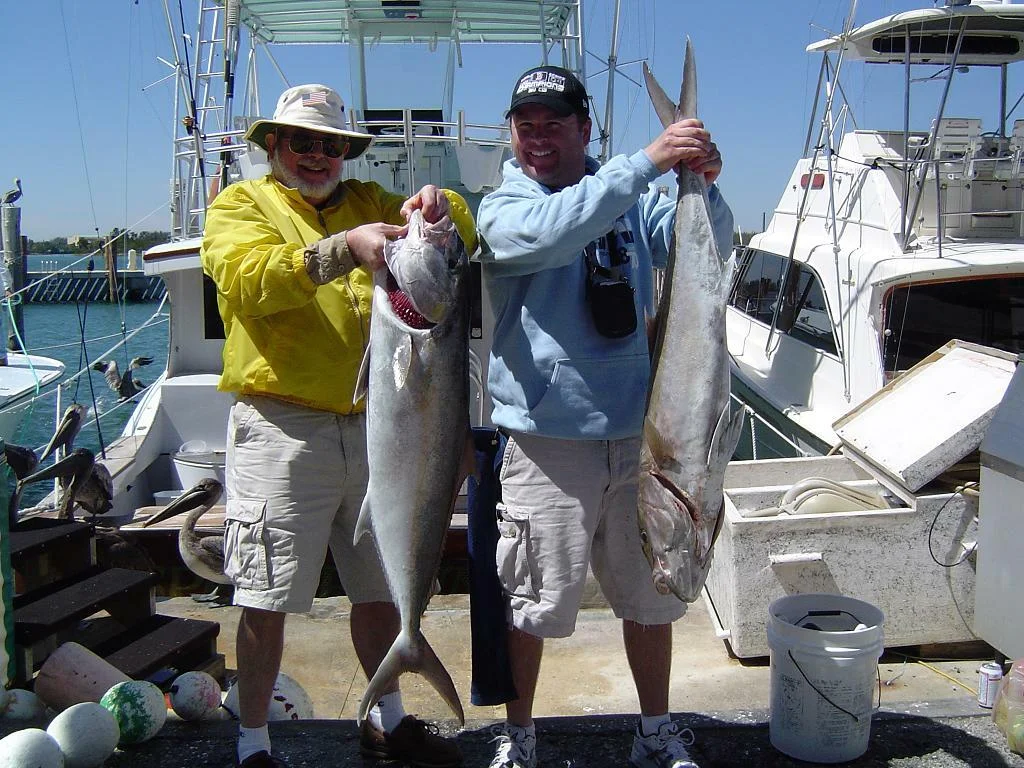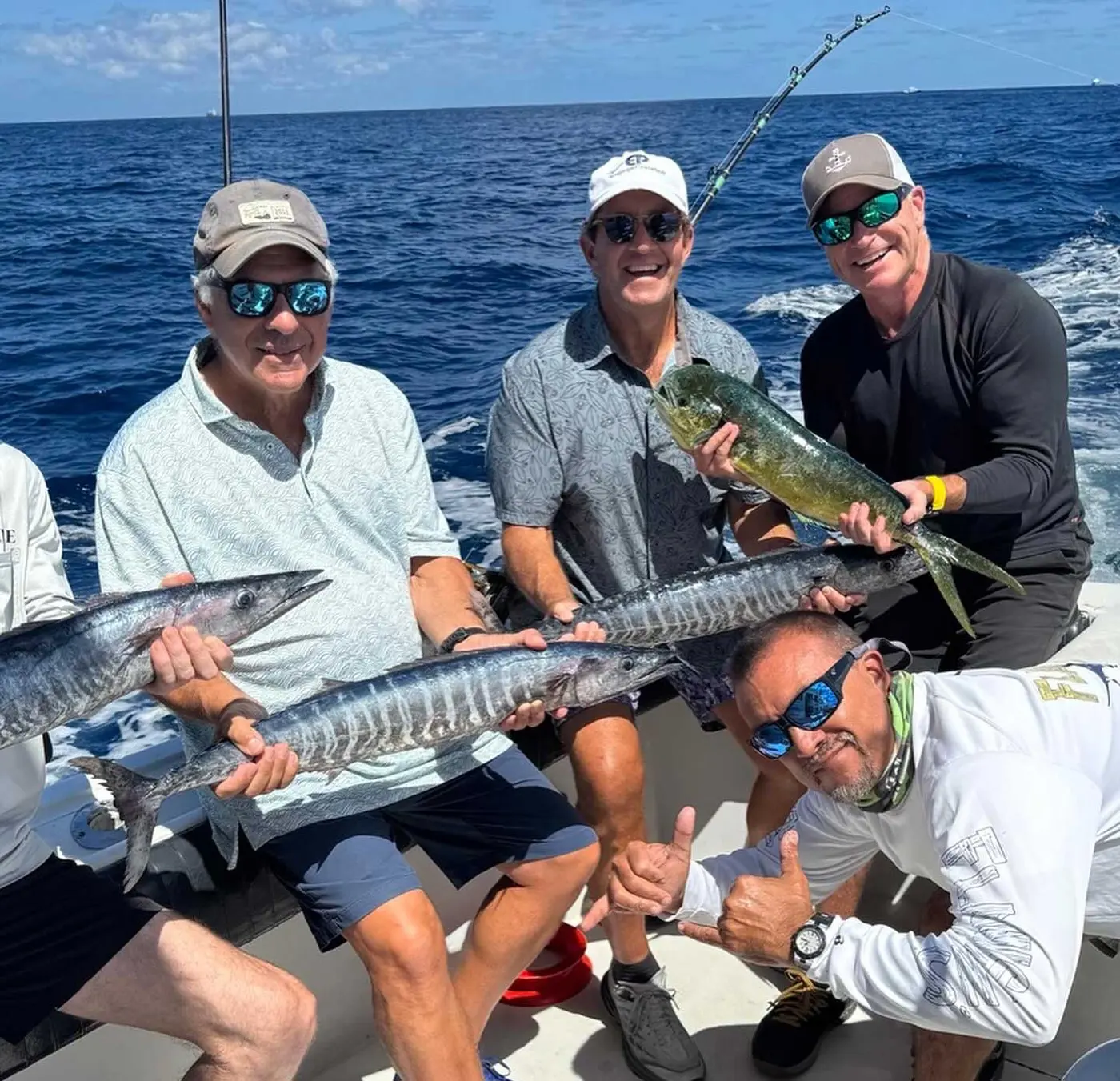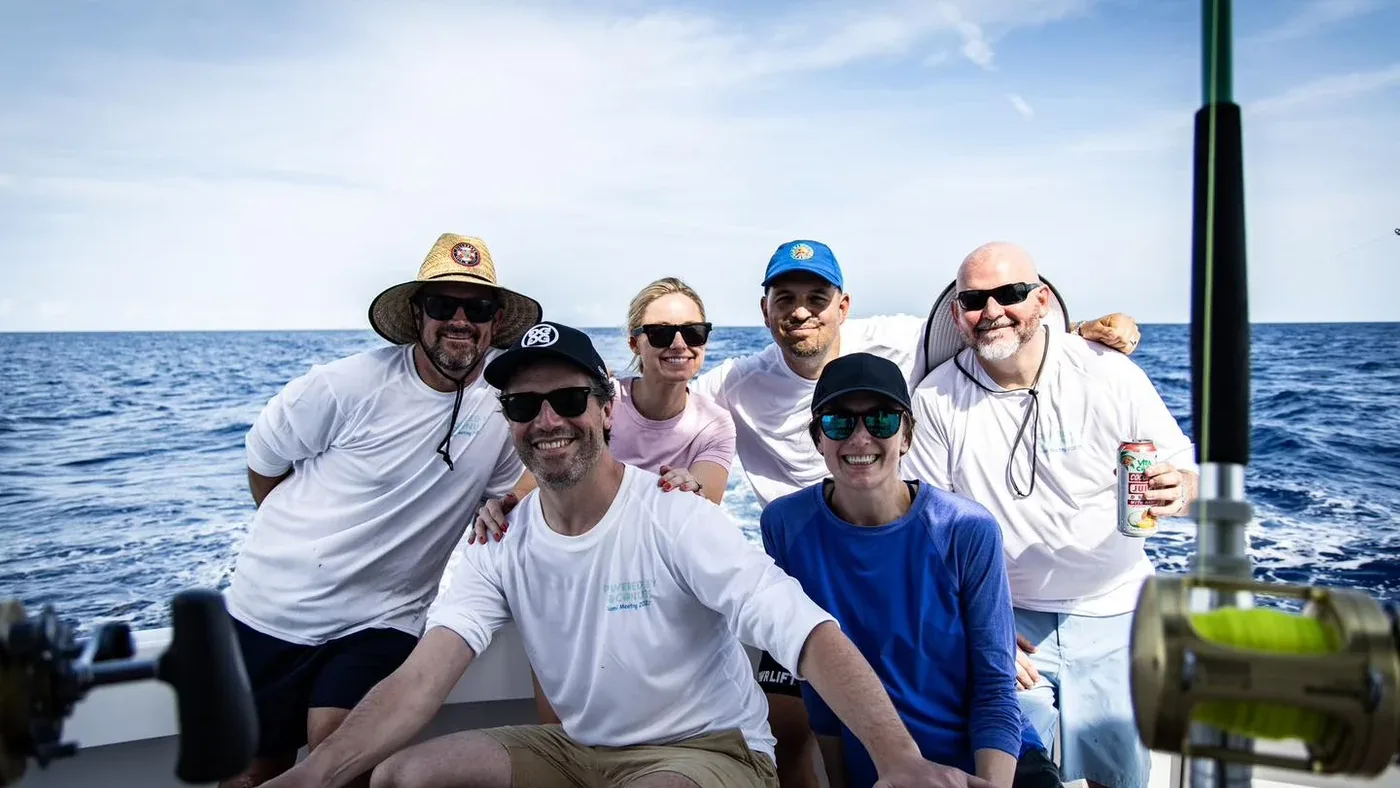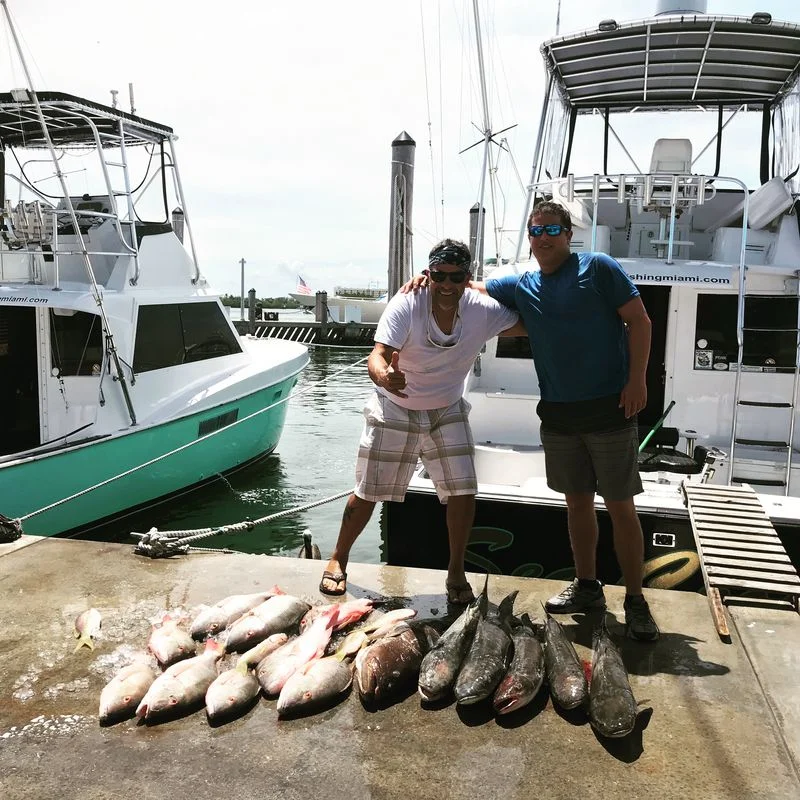
Rained in for three days, then we finally got out. Trolled the reef for fresh bait, anchored in 75 feet, and put a 35 pound black grouper on the deck.
Three Days Of Rain, Then A Break
We were rained in for three days, but we finally got a break in the weather and we headed out fishing.
Early June is the start of our rainy season, and it comes in waves. A few days of squalls and wind, then a stretch of flat calm mornings that make you forget the rain ever happened.
Getting weathered in is part of fishing here in the summer. What matters is being ready to go the moment the window opens, because those first clear days after a blow are often excellent.
The rain stirs the water and moves bait around. When it clears, the fish that stopped feeding during the worst of it usually make up for lost time.
Trolling The Reef For Fresh Bait
The first thing we did in the morning was troll the reef for some fresh bait. It was not too long before we had a few barracuda and a couple of mackerel in the box.
That is a deliberate first move, not a warm up. Everything we were going to do that day depended on having fresh bait, and the best way to get it is to catch it yourself.
Barracuda make outstanding cut bait for grouper and shark. Mackerel work for the same job, and both are abundant on the reef off Miami Beach most of the year.
Frozen bait will get bitten, but fresh bait bleeds and smells right in the water. When you are trying to pull a big grouper out of structure, that difference decides the day.
We also picked up yellowtail snapper later, which became our live baits for the bottom. Catching your own live bait on the spot is the most reliable way to match what the fish are already eating.
Anchoring In 75 Feet Over Good Bottom
We decided to anchor up in around 75 feet of water over some nice bottom. Anchoring is a different discipline than trolling, and it takes patience to set up correctly.
Position is everything. You want the boat sitting up current of the structure so your chum and your baits drift back into it, not away from it. Getting that wrong means you fish all morning for nothing.
I started chunk fishing on one side of the boat. Chunking puts a steady stream of cut bait in the water, which pulls fish up out of the rocks and toward the boat.
Sheldon was live baiting with yellowtails for grouper on the bottom. Two completely different presentations off the same anchor, covering the top of the water column and the bottom at once.
Seventy five feet is a productive depth off Miami Beach. There is enough structure at that range to hold grouper, snapper, cobia and amberjack, and it is close enough to fish comfortably on a short trip.
A Black Grouper Over 35 Pounds
It was not too long before Sheldon was on with a nice black grouper over 35 pounds. That is a serious fish anywhere, and it is a serious fish here.
A grouper that size does one thing when it feels the hook. It turns and runs straight back into the structure, and if it reaches it you are cut off immediately.
The only answer is heavy drag and fast cranking for the first ten seconds. Get its head turned and up off the bottom and you have a chance. Let it get back down and the fight is over.
Live yellowtail is about as good a grouper bait as exists here. A big black grouper eats exactly that in the wild, so there is nothing to convince it of.
Bottom fishing like this is a nice change of pace from trolling. It is slower, it requires more patience, and the payoff is usually a much bigger single fish.
There are also seasons and size limits on grouper that change from year to year. I keep up with the current regulations and we fish within them, so ask at the dock if you want to know what is open.
Cobia And Mutton Snapper Mixed In
Soon after that we started hooking up some really nice cobia with some nice mutton snappers mixed in. Before you knew it we had a really nice catch and started heading back in.
Cobia are one of my favorite fish to see show up. They come in curious, often right up behind the boat, and if you can get a bait in front of one quickly it usually eats.
They also fight far harder than their shape suggests, and they are excellent on the table. A cobia in the box is a good day regardless of what else happens.
Mutton snapper are the other prize on that bottom. They are cautious fish, so long leaders, fresh bait and a natural drift matter more than heavy tackle.
The mix of species that came off one anchor spot is why I fish structure when the trolling slows. Grouper, cobia and mutton snapper all live on the same piece of bottom.
That bottom fishing runs the length of our South Florida fishing charters range, from Miami Beach north toward Fort Lauderdale.
Why Summer Bottom Fishing Works Here
June is the front end of our summer pattern, and it changes what makes sense to fish. The seas go flat, the water warms, and the reef and wreck species get very active.
Flat conditions are what make anchoring practical. Setting an anchor precisely over a piece of bottom in a two foot sea is easy, and it is miserable in five feet of chop.
Summer is also when the offshore program shifts. Mahi move to the weed lines, blackfin stay strong, and the best swordfish window of the year opens in the deep water offshore.
Bottom fishing gives a group something different. Instead of watching a trolling spread, everyone is holding a rod and feeling for the bite, which suits anglers who want to be hands on the whole time.
It also produces the best eating fish we catch. Grouper, mutton snapper and yellowtail are all outstanding, and they come off structure that sits within a few miles of Haulover Inlet.
Which species are active in any given month is laid out in our Miami deep sea fishing seasons calendar, and the boats are rigged for both programs as described in our Miami charter fleet rundown.
Fresh Bait Was The Whole Story
The key to the success we had today was using fresh bait. That is not a throwaway line at the end of a report, it is the actual reason the day worked.
We caught our own barracuda and mackerel for cut bait and our own yellowtail for live bait. Everything we put down had been swimming an hour earlier.
Spending the first hour of a trip catching bait feels like a waste of fishing time to some people. It is the opposite. That hour is an investment that pays off for the rest of the day.
Summer is well suited to this style. The seas are usually flat, anchoring is comfortable, and the reef and wreck species are active. All of our Miami fishing charters can be run this way if your group prefers bottom fishing to trolling.
If you want to commit half a day to structure, a half day fishing charter is enough time to catch bait and fish a good spot properly. Just tell me when you book so we plan the morning around it.
Tight lines and stay safe, Capt. Ralph.
Sea Cross Sportfishing, Miami Beach
Fish The Same Water
Capt. Ralph runs these trips out of Bill Bird Marina at Haulover Park. Call (305) 773-2282 to talk dates with Capt. Ralph, or browse the rest of the Miami fishing reports from the log.