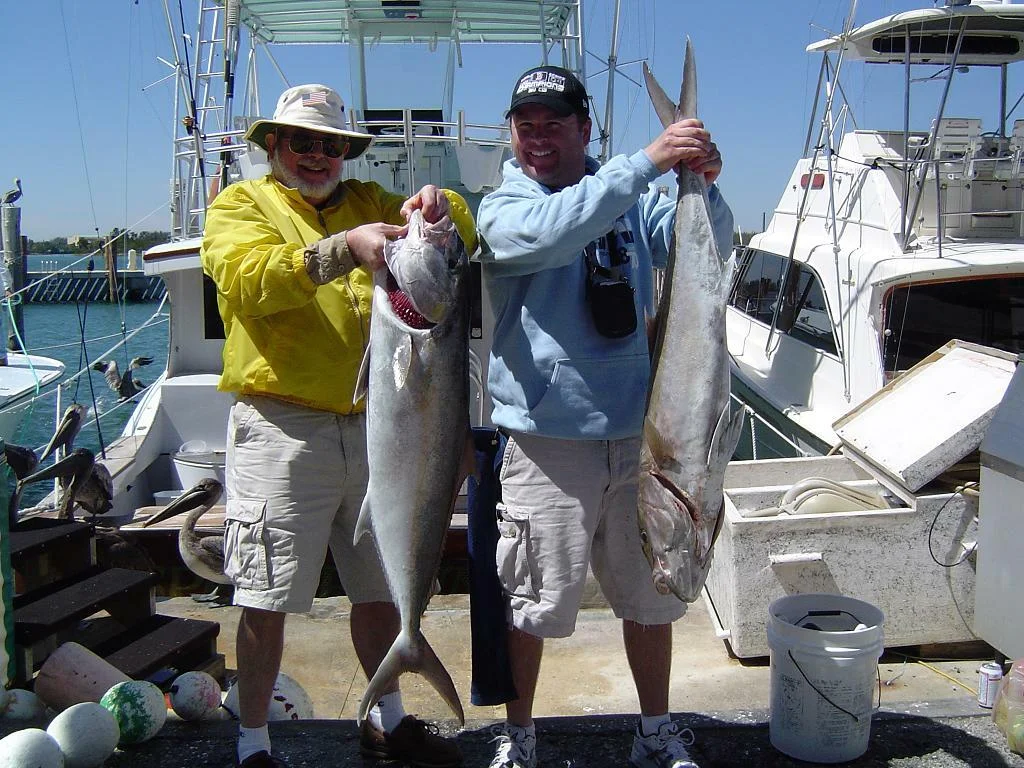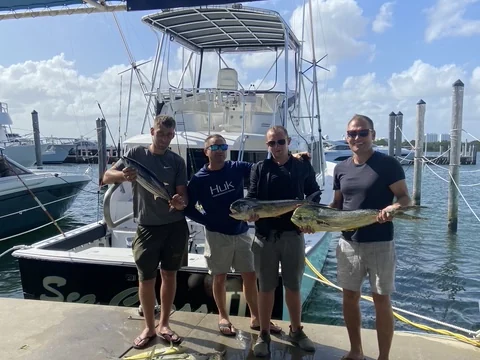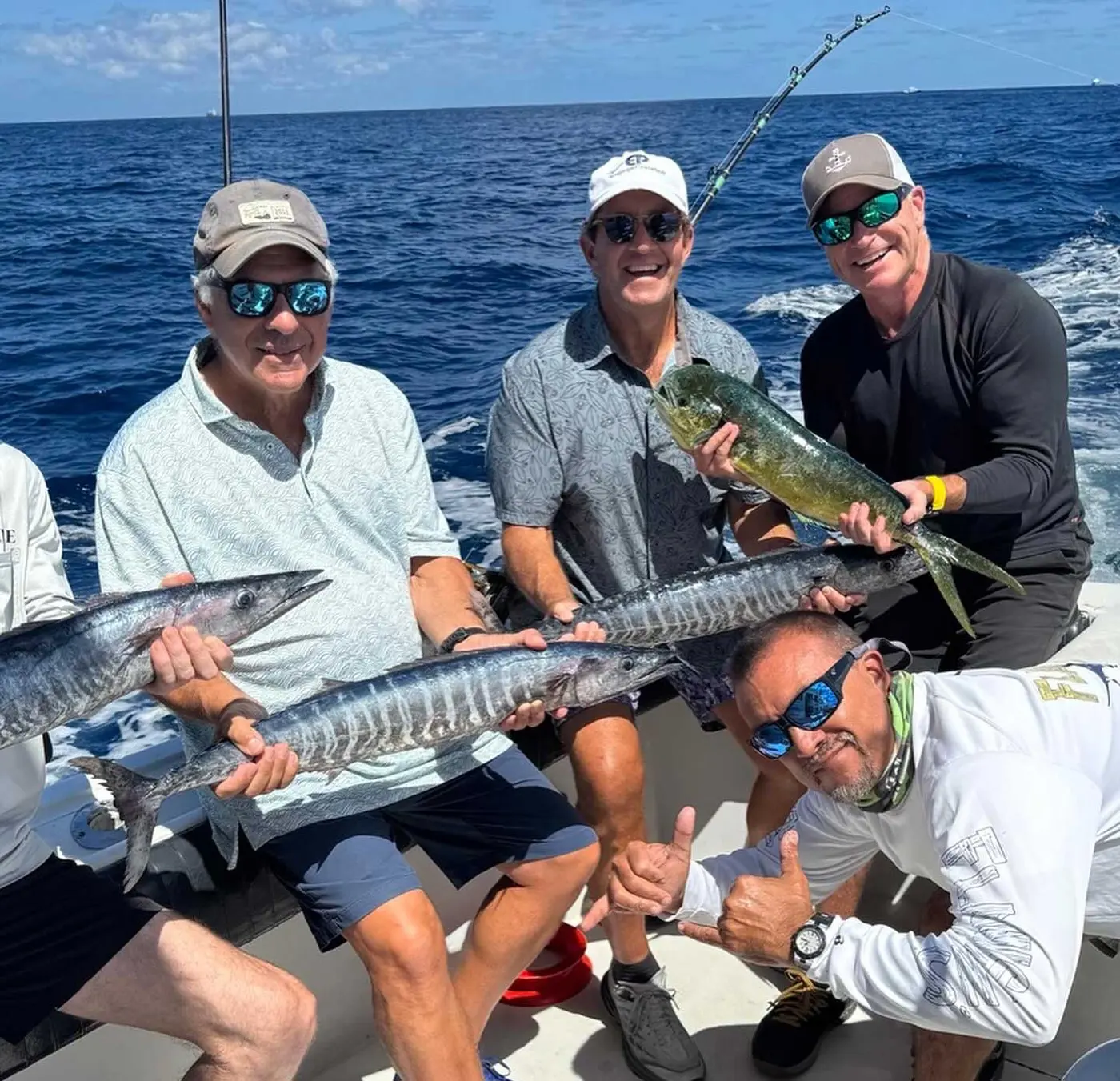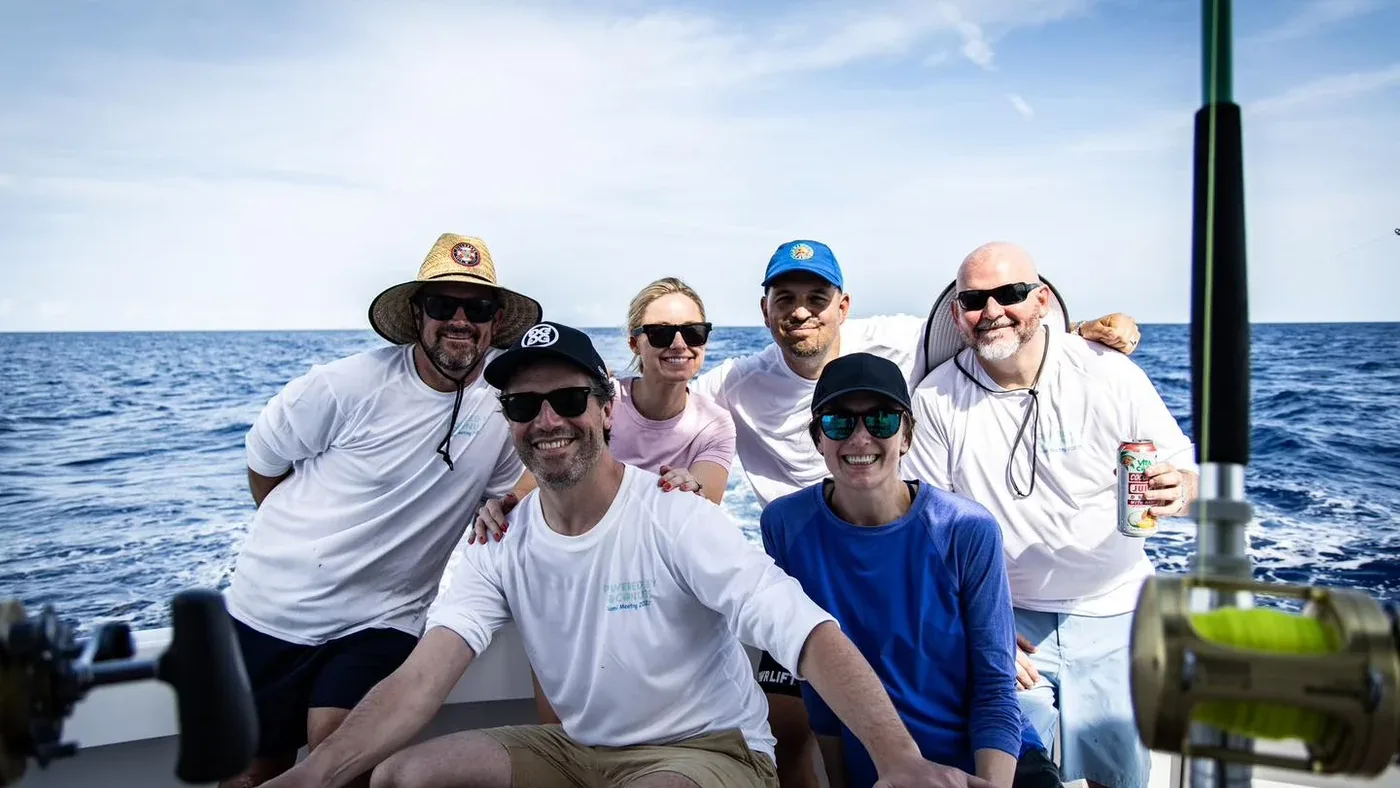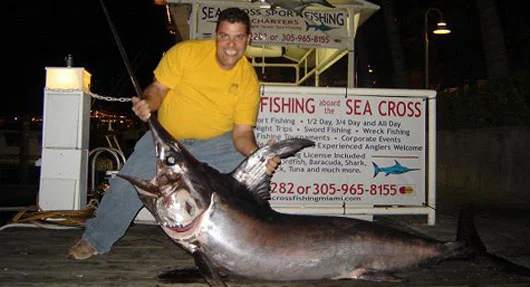
A September morning in 350 feet of water gave up two wahoo on trolled strips behind a planer, then mahi and small blackfin tuna on feathers.
Two Wahoo Before the Sun Got High
Another awesome day deep sea fishing in Miami. Monday, on a half day charter fishing trip, we had a few nice catches. The early morning saw two wahoo make it to the fish box.
We were fishing in 350 feet of water. The first wahoo was 28 pounds and the next fish tipped the scales at 39 pounds. Both came in the first couple of hours, which is exactly when wahoo tend to make mistakes.
Early light is worth more than any piece of tackle. Wahoo hunt hardest in low light, and by ten in the morning the same troll can feel empty. We were rigged and pulling baits before the sun cleared the buildings behind us.
Two fish like that turn a morning trip into a memory. Nobody on board expected a 39 pound wahoo before breakfast.
The Strip Bait and Planer Setup That Did It
Both fish ate trolled strip baits, fished on 70 foot leaders behind a planer with pearl baby tinsels. No wire, just a 9/0 extra strong hook. That rig is simple, and it has caught more wahoo for me than anything fancier.
The long leader is the part people get wrong. Seventy feet of leader puts real distance between the planer and the bait, so the fish never sees hardware near its meal. In clear water that distance is the whole reason you get bit.
Skipping wire is a calculated trade. Wire costs bites in clear water and a heavy single hook survives most encounters. Some days a wahoo cuts you off and you accept it.
A pearl baby tinsel in front of the strip adds flash without bulk. It looks like a small fish fleeing, which is the only thing a wahoo needs to see.
Why Wahoo Hold Deep in 350 Feet
Wahoo are not surface fish most of the time. They sit well below the spread, look up, and come vertically at anything that looks vulnerable. That is why the planer rod goes off while the flat lines sit quiet.
A planer forces a bait down to somewhere between 20 and 40 feet at trolling speed. It drops the offering into the strike zone and holds it while we troll. Without one you are fishing above the fish all morning.
The 350 foot line off this coast is a natural edge. It is deep enough for blue water to push in, shallow enough that bait stacks against the bottom contour. Wahoo patrol that seam all fall.
Speed matters too. I troll faster for wahoo than for anything else, because a bait that looks too easy gets ignored by them.
Mahi and Football Blackfin on Feathers
The day also saw a handful of mahi-mahi. We had a few football sized blackfin tuna in the 10 pound range. The tuna were attracted by black and red feathers, way back in the spread.
Way back matters with blackfin. They are boat shy in a way that mahi simply are not, and a feather dragged fifty yards behind the transom gets eaten when a close bait does not. I run that rod off the corner on purpose.
Black and red is an old combination and it still works. It does not imitate anything exactly. It creates a small, dark, fast moving silhouette, and blackfin commit to that shape without thinking.
Football blackfin around 10 pounds are ideal on light tackle. They pull well above their size and they are excellent eating fresh.
Staying Connected to a Running Wahoo
Losing wahoo is a skill problem more often than a tackle problem. The strike is violent, the first run is enormous, and panic in those ten seconds costs you the fish. Drag settings get decided before the bait goes in, never during a fight.
The rule I give every angler is simple. Keep winding whenever the fish is not taking line, and never pump the rod hard enough to create slack. A wahoo shakes its head and a loose hook falls out of a soft mouth corner.
Once the run stops, the fight usually turns easy. They burn themselves out at ferocious speed and then come to the boat almost meekly. That is when the mate has to be sharp with the gaff.
Listen to your mate throughout. He is watching the leader, the angle and the fish, and he will tell you exactly when to lift and when to stop.
September on the Reef
On the reef, we are seeing a lot of bonitos and more kingfish starting to show up. These fish have also been quick to take strips and large drone spoons. The reef in September is a busy place.
Bonito are still thick from the summer, and they will eat anything moving. Kings arrive behind the first push of migrating bait and get more numerous every week from here to November.
That overlap is what makes September worth fishing. You are catching the tail of the summer offshore bite and the front edge of the fall mackerel run in the same trip. Few months give you both.
Our half day charters out of Miami Beach work that reef line hard during the transition.
The Fall Bait Migration Starts Now
By September the ocean up the seaboard is cooling and the baitfish know it. They begin trickling south along the beaches with the predators lined up behind them. Nothing out here ignores a moving food supply.
That trickle becomes a flood by late October and peaks in November. Kingfish and Spanish mackerel lead the parade, with bluefish and sharks working the edges. Blackfin, mahi and wahoo stay just outside along the deeper reef line.
The first migratory sails arrive to mix with our resident fish around the same time. Any northeast wind in the fall can turn that into a real sailfish day. The month by month Miami fishing calendar tracks how the transition builds.
Fishing the front edge of a migration is an underrated advantage. Fewer boats, hungry fish and pleasant weather all at once.
How We Run a Morning Troll
A troll spread is not just four lines in the water. Each position covers a different depth and distance, and the point is to give a fish several believable choices. Flat lines ride close, riggers reach out and back, planers go down.
I change the spread constantly based on what eats. Two wahoo on the planer means the planer stays out and the rest gets adjusted around it. Stubbornness costs more fish than any wrong lure.
Everything on board is set up for this work. The Hatteras sportfishing fleet runs outriggers, live wells and Biscayne Rods customs matched to Shimano, Penn, Daiwa and Newell reels.
Our crew rigs, clears lines and gaffs, so guests get to fish rather than fuss with tackle. That is how a day on the water should run.
Taking Care of Wahoo and Tuna on Ice
Wahoo and blackfin are two of the finest eating fish in this ocean, and both punish careless handling. Heat ruins the texture within an hour on a warm September deck. Ice them immediately and ice them properly.
We bleed them, get them into the box and bury them in ice. A fish laid on top of the ice keeps far worse than one packed inside it. That single habit is the difference between good fish and great fish at the table.
The mate cleans everything at the dock and cuts fillets or steaks to order. A thick wahoo steak on a grill needs almost nothing done to it.
Have a cooler in the car. We do not ship fish anywhere, so plan for how you are getting it where it needs to go.
So Let Us Get Out There
September mornings like this one are why I still love this job. Two heavy wahoo, a few mahi, some tuna, and back at the dock by noon with fillets on the table.
If wahoo are what you want, we will target them specifically. Just tell me when you book and we will plan the spread and the run around that goal. Photos from mornings like this are posted in the Miami Beach fishing charter gallery.
Fall is one of my favorite stretches of the year out here. The weather is still kind and the fish are getting fat.
Tight lines and stay safe, Capt. Ralph
Sea Cross Sportfishing, Miami Beach
Fish The Same Water
Capt. Ralph runs these trips out of Bill Bird Marina at Haulover Park. Call (305) 773-2282 to talk dates with Capt. Ralph, or browse the rest of the Miami fishing reports from the log.