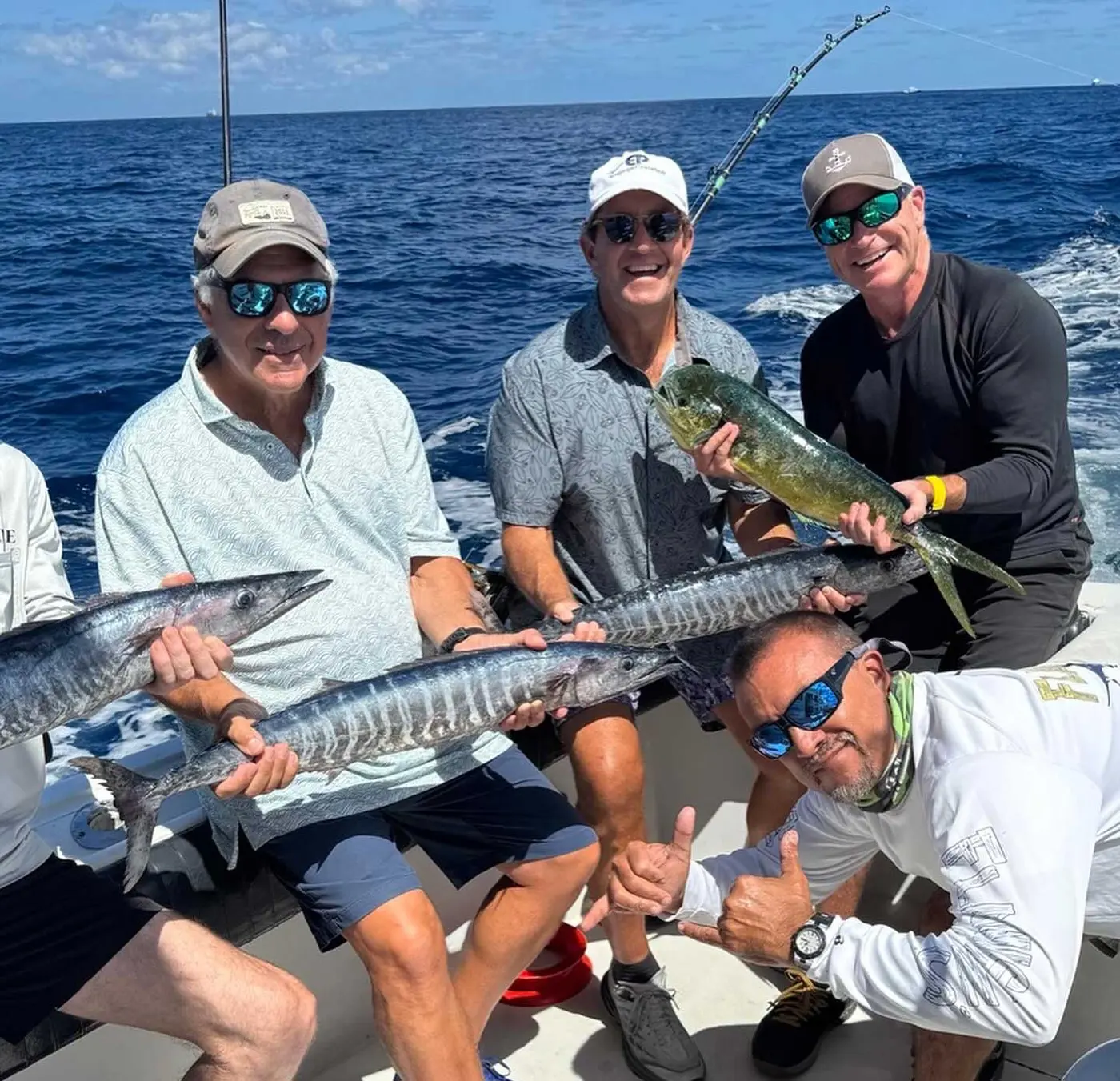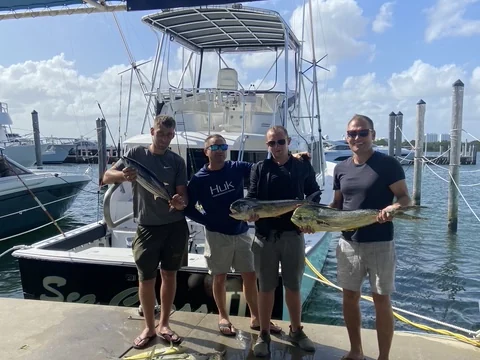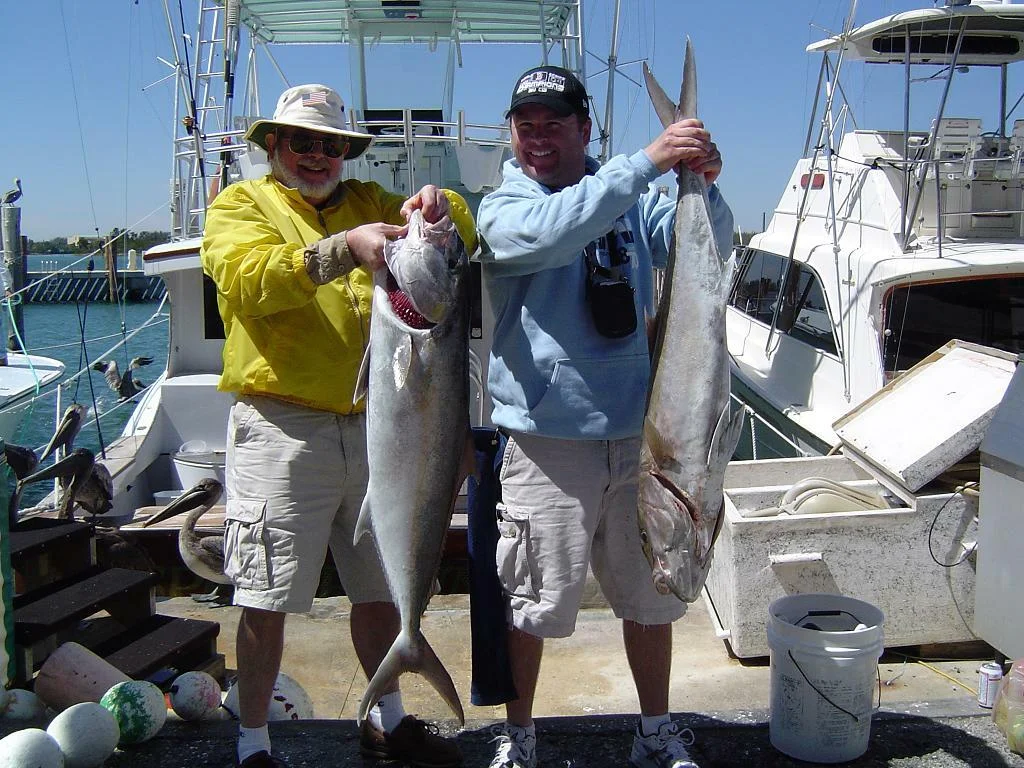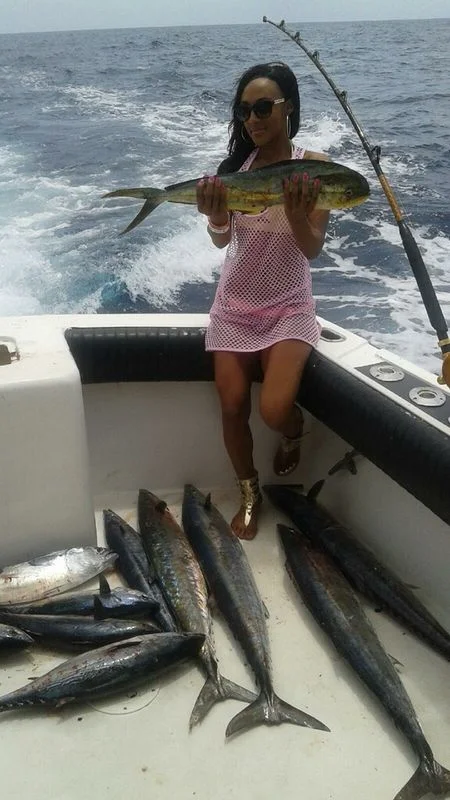
April kingfish showed up hard on chrome drone spoons, big gaffer dolphin worked the floaters offshore, and a push of sailfish moved through the grounds.
The King Mackerel Are Back With a Vengeance
The king mackerel are back with a vengeance. We have been catching kingfish on planers with number 3 chrome drone spoons. The bite turned on over a handful of days and has not let up since.
Spring does this every year along our stretch of coast. Bait that wintered to the south comes back north, and the mackerels ride that wave. Once they arrive, the reef edge gets loud.
The fish are healthy too. Months of easy feeding put weight on them, and a spring king fights noticeably harder than a skinny winter fish. The runs are longer and the head shakes are meaner.
When kings are in this thick, the hardest part of my day is deciding when to leave the reef and go look for something else.
Planers and Chrome Drone Spoons
A planer and a big chrome spoon is not a subtle presentation. It is a fast moving flash at a depth kings can see from a long way off. They chase it down and eat it without much hesitation.
The number 3 drone is my workhorse spoon in spring. It has enough body to wobble properly at trolling speed and enough chrome to throw light in slightly stained water. Smaller spoons get ignored when the fish are eating well.
The planer does the heavy work. It drags the whole rig down through the surface layer and holds it near the depth the kings are patrolling. Without one you are dragging metal over their heads.
We run two of these rods on most spring trips and cover water until something eats. Then we slow down and work that stretch hard.
Why Long Leaders Are the Key Right Now
Because of the water clarity, long leaders have been the key to getting the bite. Spring water off this coast can be startlingly clear, and clear water makes every fish smarter. A short leader puts hardware right next to your offering.
Also, with these large spoons, no wire is required, which makes rigging your spoon as easy as can be. That surprises people who grew up wiring everything for mackerel. A big spoon simply does not sit in a king's mouth the way a bait does.
Skipping wire buys you bites. Kings in clean water will track a wired spoon and peel away at the last second without ever touching it. Losing an occasional spoon is a fair trade.
Leader length gets adjusted by eye every morning. Dirty water after a blow means shorter, and gin clear blue water means longer.
Fighting a Smoker King Without Losing It
A smoker king is a different animal from the school sized fish. Thirty pounds and up, and the first run empties line faster than most anglers have ever seen. People freeze, and that is when the hook pulls.
Kings are famous for skyrocketing. A big one will launch itself into the air on the strike, sometimes twenty feet from where the bait was. That moment sells the whole trip even when the fish comes off.
The mouth is bone and teeth with very little soft tissue to hold a hook. Constant tension keeps the point buried, while jerking or pumping hard opens the wound and loses fish. Let the drag do its job.
Near the boat they make a final surge under the hull. That is where the mate earns his keep with the gaff.
Slammer Dolphin Under Birds and Floaters
As can be expected in the spring, there are also some really big mahi-mahi offshore under birds and floaters. Some of these gaffer dolphin are in the 30 to 50 pound range. Those are proper fish, not schoolies.
Big mahi behave differently from the small ones. They travel in pairs or small groups instead of packs, and they hold tighter to a single piece of structure. One board or pallet can hide a fish that changes your whole season.
They have been fattening on the same migrating bait that brought the kings in. That is why spring produces the heaviest dolphin of the year on this coast.
When we find a floater worth working, we slow down and fish it properly rather than dragging past it. Time spent on good structure pays.
Check the Moon Phase Before You Go
One word of advice is to check the moon phase. On the full moon the bite is better late in the afternoon, between three and eight in the evening. That pattern holds year after year out here.
The reasoning is straightforward. A bright night lets fish feed after dark, so they are not especially hungry at sunrise. By mid afternoon that changes and they start hunting again.
On a dark moon I want to be on the water at first light instead. Same fish, opposite schedule. Booking the wrong end of the day around a full moon can cost you the best hours.
If your dates are flexible, our three quarter day charters can be shifted later to line up with an afternoon bite.
A Push of Sailfish Through the Grounds
We also had a nice push of sailfish come through the Haulover fishing grounds. In recent trips, our clients have had multiple shots on these acrobatic fish. Spring sailfish are a bonus rather than a guarantee, and this year they cooperated.
April sails tend to show on the back of a northeast wind. When the breeze swings into that quadrant, the fish get active near the surface and become far easier to spot. Flat, windless days are the hard ones.
Multiple shots means exactly that. Fish come up on the baits, some eat and some do not, and the cockpit turns into controlled chaos either way.
They hold in the same 75 to 250 foot corridor they use all winter. The deep sea fishing seasons off Miami explain why that band produces year round.
April Winds and the Kite Bite
April is a beautiful month to be on the water here. Temperatures have warmed, the harsh March wind has eased, and the spring bait migration is still running strong. It is one of the easier months to plan a trip around.
Head offshore in April and you will see boats flying fishing kites. A kite suspends live baits right on the surface where they splash and struggle. Gamefish hunt upward, and a bait pinned at the surface looks exactly like an easy meal.
That noise and vibration acts like a dinner bell. Sailfish, kings and mahi all respond to it, which is why kite fishing dominates this coast whenever the wind allows.
Wind direction decides everything. Keep an eye on the forecast and pick a day when it swings north to northeast.
What We Have Rigged in Spring
A spring spread has to cover two very different jobs. Planers and spoons for the reef kings, and live bait or ballyhoo ready for whatever shows offshore. Switching between them quickly is the mark of a good crew.
Outriggers, live wells, kites and Biscayne Rods customs ride on both boats in our Hatteras charter fleet, paired with Newell, Shimano, Penn and Daiwa reels. Everything stays rigged so we lose no time when the plan changes.
Fishing licenses, bait, ice and terminal tackle are all part of the trip. Guests bring sun protection, a windbreaker and their own food and drinks.
Nobody else shares the deck. There is no stranger aboard competing for the next bite.
Spring Fishing Has Sprung in Miami
So get out on the water soon and you will not be disappointed. Spring fishing has sprung in Miami, and the window where kings, big mahi and sailfish overlap does not stay open forever.
If you want the offshore run for slammer dolphin, give yourself the hours to do it right. Our full day deep sea fishing charters let us hunt floaters properly instead of glancing at two and turning back.
Ring my cell, (305) 773-2282, and we can pick a date that fits the moon and the wind. That conversation is worth having before you book anything.
Tight lines and stay safe, Capt. Ralph
Sea Cross Sportfishing, Miami Beach
Fish The Same Water
Capt. Ralph runs these trips out of Bill Bird Marina at Haulover Park. Call (305) 773-2282 to talk dates with Capt. Ralph, or browse the rest of the Miami fishing reports from the log.