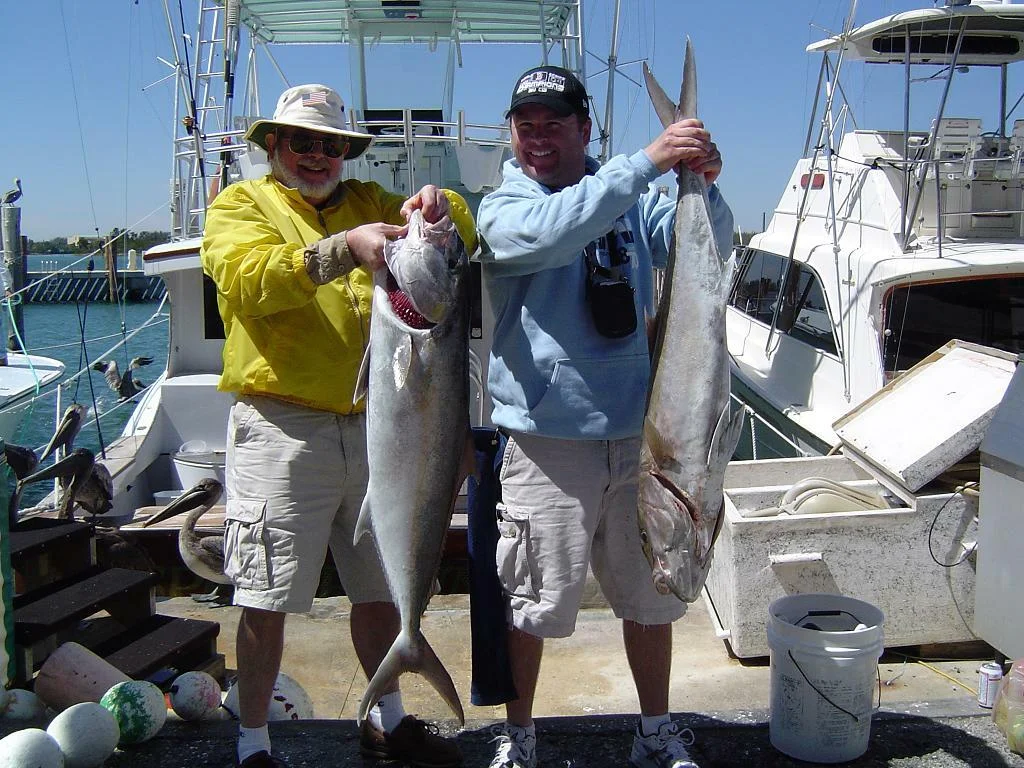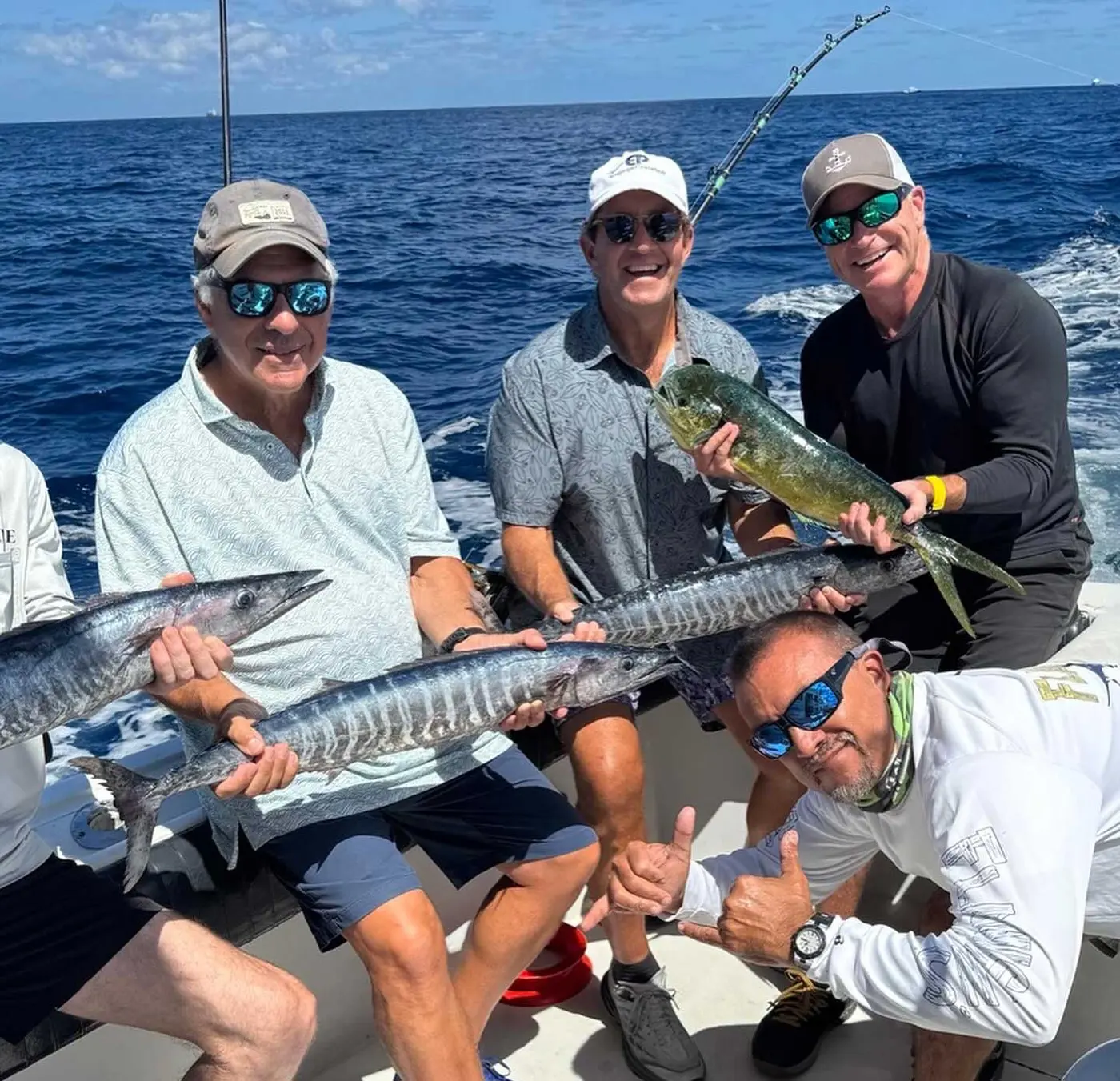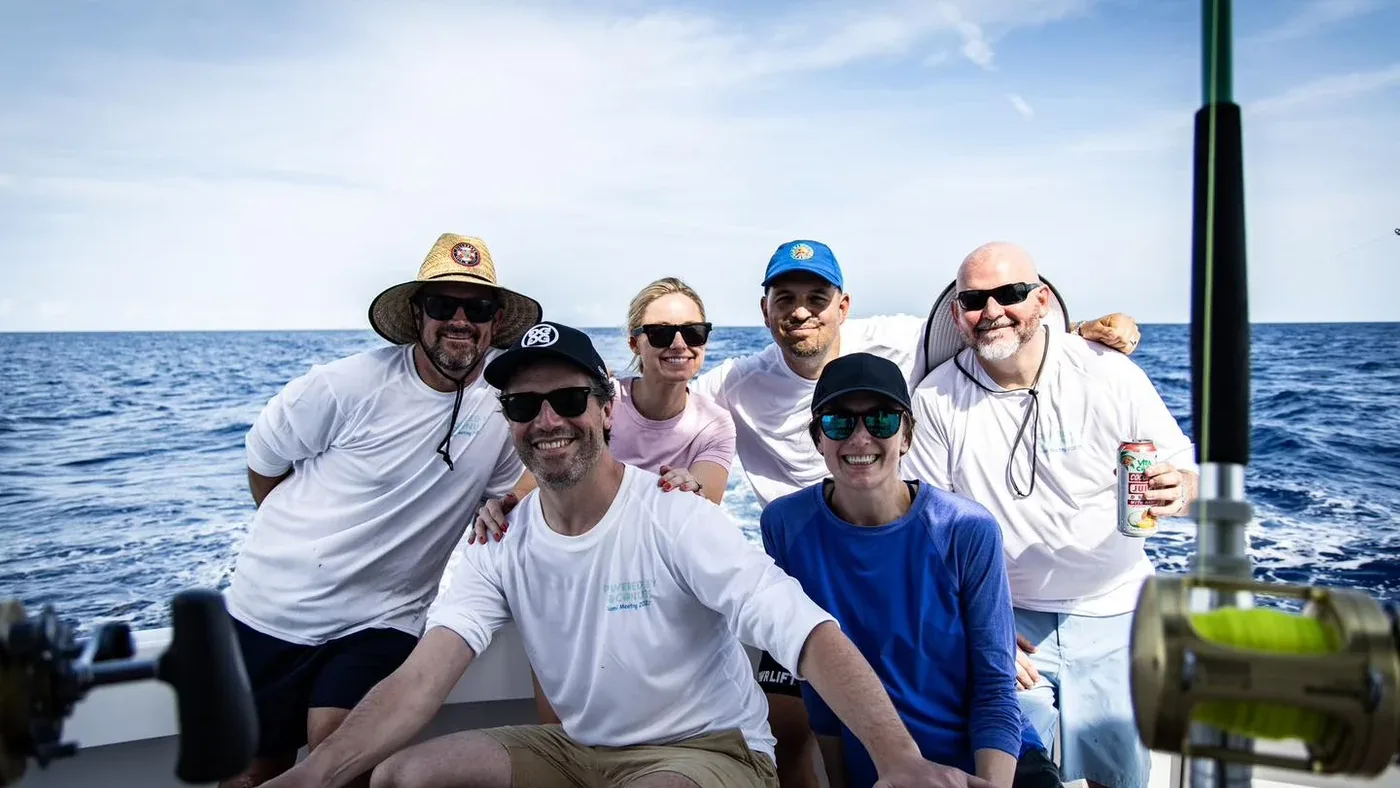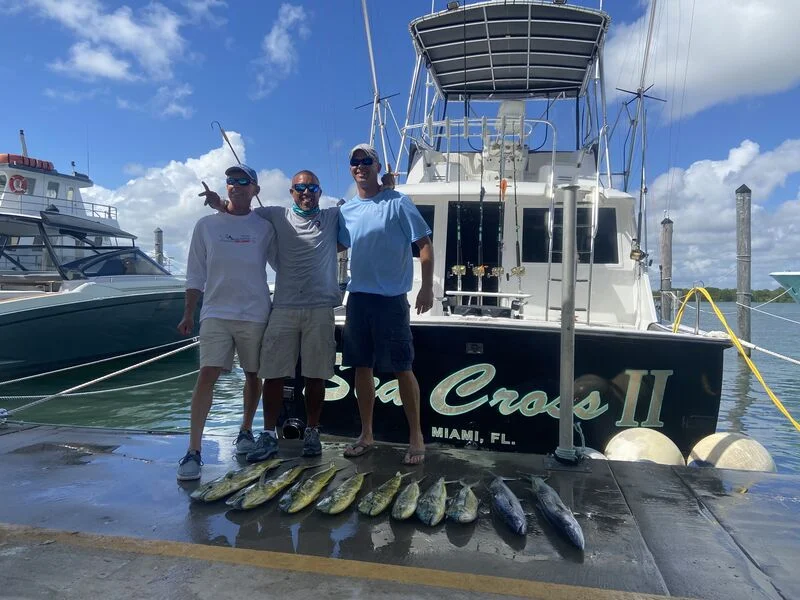
A conversation at the dock turned into a Saturday half day with a father and son from South Carolina, doubles and triples on mahi, and a reminder of why I do this.
A Conversation At The Dock
Ben and I were cutting bonito strips here at the dock when Jay walked up. He told me he is from South Carolina and he was here with his father on a business outing, and also going to the Fort Lauderdale boat show.
He wanted to do a father and son fishing trip and asked if I was available that upcoming Saturday to do a little fishing for mahi-mahi. He would not be disappointed.
A lot of my best trips start exactly like that. Somebody walks the docks at Bill Bird Marina at Haulover Park, sees the boats, and asks a question. Boat show week brings a lot of those conversations.
We booked him for Saturday morning and I told him what I tell everybody in early November. The mahi are close, the water is still warm, and the frigate birds will tell us where to go.
Hooked Up In 100 Feet Of Water
On Saturday we were heading out and it was not more than 20 minutes before we hooked the first fish in 100 feet of water. That is a short ride from the inlet by any standard.
All these fish are pushing in close to the reef chasing the bait throughout the winter, which gives us excellent opportunities for this quarry. The fall bait migration runs south along this coast, and the predators follow it right onto the reef line.
One hundred feet of water off Miami Beach is a strange and wonderful thing. You can look back and see the buildings clearly while a mahi lights up behind the bait. Most places you would be twenty miles out for the same fish.
The reason is simple. The Gulf Stream sits within about three miles of the beach here, so the deep water, the bait and the reef are all compressed into a narrow band. Our Miami Beach fishing charters are built entirely around that geography.
Frigate Birds And Multiple Hook Ups
As we kept pushing offshore, we noticed frigates hitting the water. We pulled up to them and it was not long before we had double and triple headers.
Frigate birds are the single best piece of equipment on the boat and they cost nothing. A frigate sitting high and circling is watching something. A frigate dropping down and touching the water is over feeding fish right now.
When you find a school of mahi like that, keep one fish hooked and in the water next to the boat. The rest of the school will stay with it. That is how a double turns into a triple, and how a triple turns into a box full of fish.
We throw a pitch bait at the fish milling around the hooked ones. A spinning rod with a pilchard or a chunk of ballyhoo takes care of it. That trick alone probably doubles what we catch on a school of mahi.
The Work Starts Before Anyone Shows Up
When Jay walked up, Ben and I were cutting bonito strips. That is what most mornings look like at the dock long before the first customer arrives.
Bonito strips are one of the most useful baits we have. A fresh strip cut clean and trimmed to shape will swim behind a planer or a skirted lure all day without washing out. Kingfish, wahoo and blackfin all eat them.
Rigging ballyhoo is the other pre trip job. We pass the hook through the gills, set the pin between the lower part of the eyes, and wrap it with a rubber band. Done right, that bait tracks straight for an hour of trolling.
We also check drags, retie leaders and top off the live well before anybody steps aboard. A trip can fall apart on a bad knot or a sticky drag when a good fish shows up, and there is no fixing it at that point.
None of this is glamorous, but it is where days get won. The captains who consistently produce are usually the ones who were at the dock an hour earlier.
Fresh bait beats frozen every time out here. If ballyhoo show up in the chum slick at the dock, I will throw the cast net and load the box before we leave the slip.
How We Fish A School Of Mahi
Mahi are a school fish and they behave like one. Find one and there are usually more, sometimes many more, sitting right underneath. Everything we do after the first hook up is aimed at keeping that school beside the boat.
Step one is to slow down and stop trolling. The moment a school shows, the trolling spread becomes a liability because it tangles and drags fish away from the boat. We clear lines fast and go to spinning gear.
Step two is to keep a hooked fish in the water. A mahi thrashing on a short line holds the school in place better than any chum. We leave that fish down until the next angler is hooked up, then rotate.
Step three is pitching baits. Live pilchards, chunks of ballyhoo or a small jig thrown into the milling fish will get eaten within seconds when the school is fired up. That is how the doubles and triples happen.
The last piece is knowing when it is over. When the fish stop competing and start following baits without eating, they are done. At that point we put the spread back out and go look for the next one instead of grinding a cold school.
Bull dolphin behave a little differently. The big males often hang at the edge of the school and will not eat what the schoolies are chasing. If a good bull shows, I want a single live bait pitched well away from the crowd.
Why A Half Day Works So Well In November
It was a great half day fishing trip with a father and son. That is what keeps me going in this business. Thank you Jay for fishing with us.
Four hours does not sound like much until you consider how close the fish are in November. We were bent within twenty minutes and offshore on the birds well before the halfway point of the trip.
A half day fishing charter runs eight to noon. It is the right call when the fish are on the reef, when you have a business schedule to keep, or when it is somebody's first time offshore. If you want a longer offshore push or a real shot at a sailfish, the longer Miami fishing charters give us more room to work.
November rates well across the board. Kingfish are excellent, wahoo are excellent, blackfin tuna are excellent and sailfish are climbing toward their winter peak. You can compare the months in our Miami deep sea fishing seasons calendar.
Only On The Sea Cross
And like we always say, only on the Sea Cross.
That line started as a joke among the crew and it stuck, because it is true more often than not. Days like this one are the whole reason I have kept the boats running since 2000.
A father and son who want a quiet morning get a quiet morning, and a group of six who want noise get that instead.
Bait, tackle, custom rods, ice, coolers and Florida fishing licenses are all included. Bring a hat, polarized sunglasses, sunscreen and whatever you want to eat and drink. What other anglers have said about their trips is collected in our fishing charter reviews.
Tight lines and stay safe, Capt. Ralph.
Sea Cross Sportfishing, Miami Beach
Fish The Same Water
Capt. Ralph runs these trips out of Bill Bird Marina at Haulover Park. Call (305) 773-2282 to talk dates with Capt. Ralph, or browse the rest of the Miami fishing reports from the log.