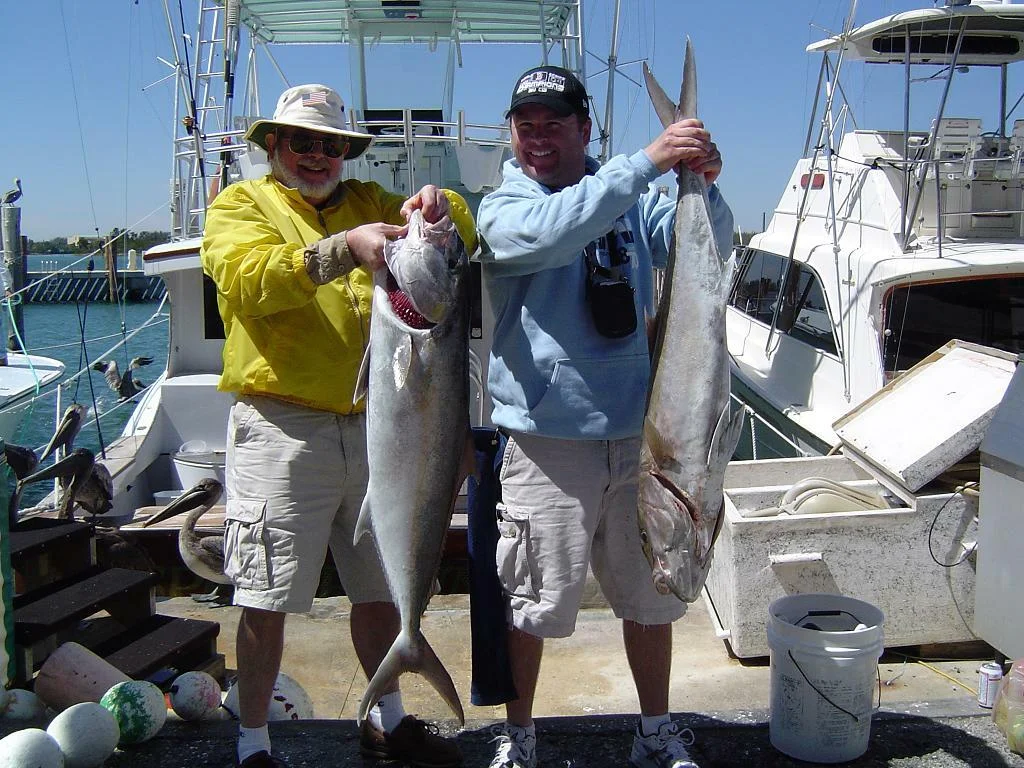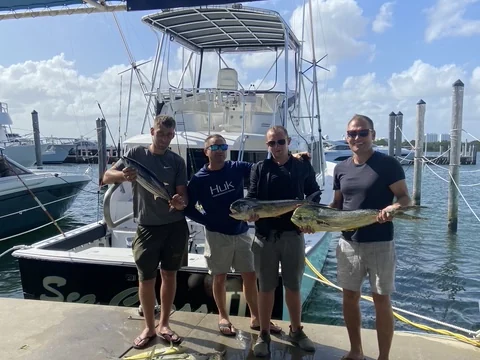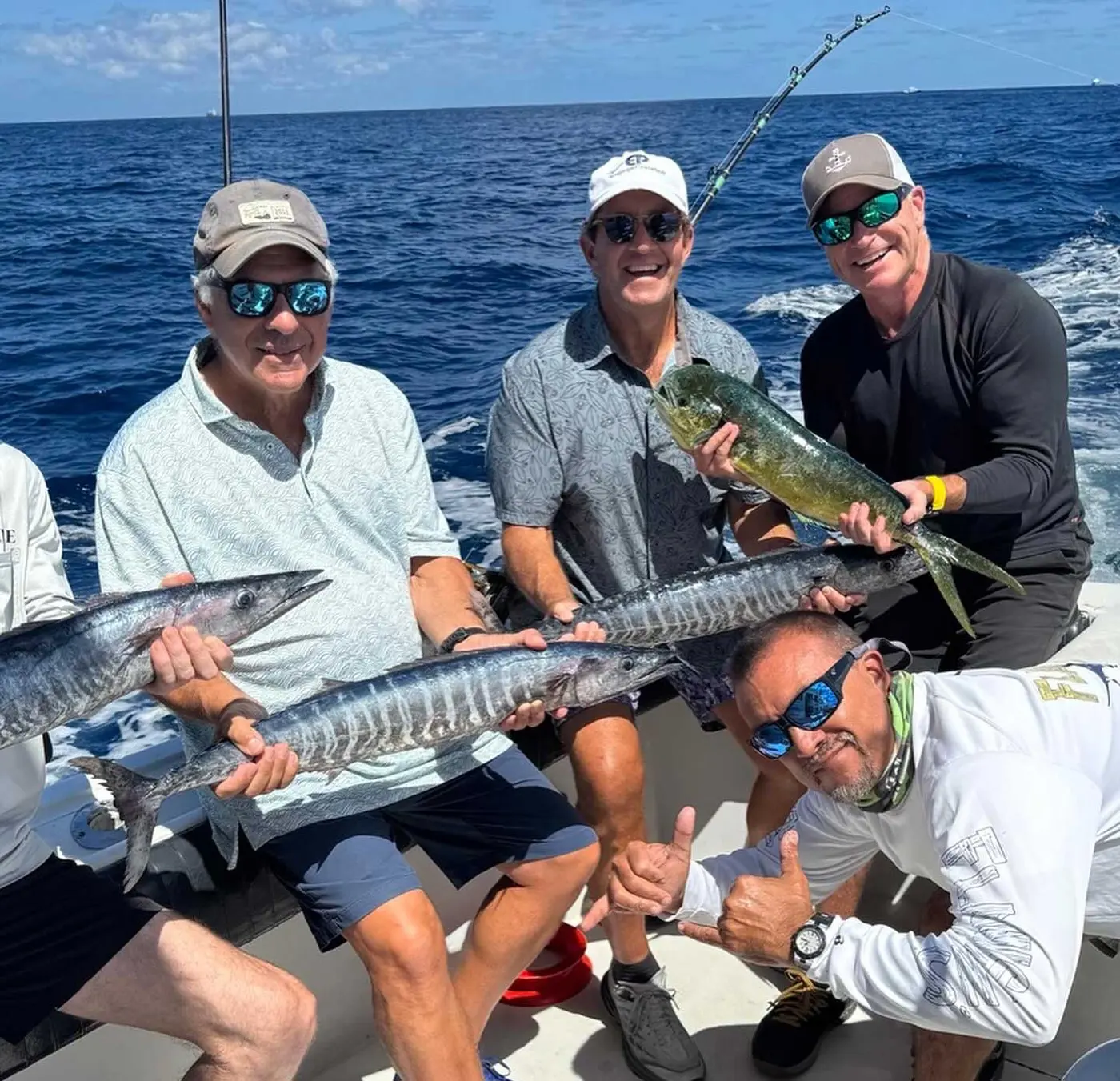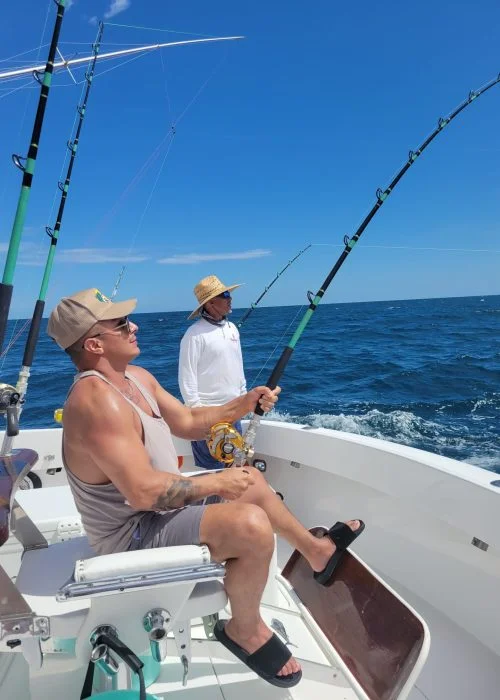
Spring winds are easing off Miami Beach and the bite is building. Kings on the reef, tuna and mahi outside, and wahoo right behind them.
The Winds Are Laying Down
With each passing day summer is almost here. As the winds lay down the fishing is getting hotter. March is a windy month along this coast, and every week that goes by trades some of that breeze for better sea conditions.
Those winds are not all bad. They stack bait against the reef and light up the bite in close, and our boats are heavy enough to fish comfortably through them. Smaller vessels often cannot say the same.
What changes as the wind eases is range. Suddenly the offshore run stops being a decision and starts being routine, which opens up an entirely different set of fish.
By late March we are usually fishing both worlds in the same trip.
Kingfish Are Starting to Show on the Reef
The kingfish are starting to show up on the reef. Spring is prime time for them here, and the numbers climb every week as the northbound bait migration builds along the beach.
They sit along the outer edge and the top of the drop, usually in 125 to 200 feet. Slow trolled live blue runners, big chrome spoons behind planers and drifted live baits all get eaten when the fish are thick.
Kings are acrobatic. A good one will come clear of the water on the strike, then make a run that leaves everybody staring at the reel. There is no mistaking it for anything else.
Spanish mackerel and bluefish mix into the same water, which keeps rods bent between the bigger bites.
Tunas and Mahi Offshore With Wahoo Behind
The tunas and mahi mahi are offshore, with the wahoos right behind. There is always some action offshore if you are willing to go look for it.
Blackfin tuna work the water just beyond the reef, usually in 200 to 300 feet, and they show best in low light. Live pilchard chum is the reliable method, with trolled feathers as the backup when bait runs short.
Spring mahi are the heavyweights of the year. Fish between 30 and 50 pounds turn up under birds and floaters after a winter of steady feeding.
Wahoo shadow all of it. They sit deep under the same structure and take a planer bait when nothing touches the surface spread.
Birds and Current Rips Are the Key
Looking for birds and current rips is key to the fishing here in Miami Beach. That one sentence is most of what I know about finding fish offshore, and it has not changed in all the years I have run these boats.
Frigates hovering low over the water mean bait is being driven up from beneath. Terns and gulls diving mean the same thing on a smaller scale. Either way, you turn the boat.
Rips are the other half. Where two currents collide and will not blend, weed and debris gather on the seam and bait hides in it. Trolling the length of a rip beats crossing it every time.
Both signs are free and visible from the bridge. You just have to spend the time looking.
Big Swordfish Are Out There Too
Late winter and early spring bring the largest swordfish of the year to this coast. Breeder fish arrive here on their spawning run, and the biggest of them usually show in February.
Daytime swordfishing happens in very deep water, out toward 1,800 feet. It takes electric reels, large spools of heavy line and a great deal of patience, because the fish feed near the bottom during daylight.
After dark they climb toward the surface and can be taken on heavy conventional tackle. Either way it is a long day and a specialized one, not something we squeeze into a morning trip.
This stretch of coast doubles as a spawning ground for Atlantic swordfish, which is why the fishery exists here at all.
Getting Good Bait Before We Fish
Half of any offshore day is decided before the first line goes out. Bait quality drives everything, and a well full of strong, lively fish is worth more than any lure in the box.
Goggle eyes are the premium bait on this coast. Catching your own means going out at night and working 200 to 500 feet with lights and sabiki rigs, which is a skill and a chore in equal measure.
Pilchards and threadfin herring can be netted closer in when conditions cooperate. Blue runners and ballyhoo round out what we carry depending on the target.
A bait that swims hard sends out vibration a predator can feel from a long way off. A tired bait just hangs there and catches nothing.
What Spring Wind Does to the Water
Wind shapes everything out here, more than temperature and more than the calendar. A hard northeast breeze opposing the Gulf Stream stands the swell up and gets sailfish riding those waves south.
East and southeast wind does something different. It pushes the Stream tight against the coast and concentrates weed into long unified lines, which is the summer pattern starting to form.
Behind a front, the water often gets stirred and clean at the same time. Two days after a blow is frequently the best fishing of the week.
The month by month Miami deep sea fishing calendar breaks down how each wind direction changes the target species.
Why This Coast Fishes So Well
The Gulf Stream swings in tight to the beach here, closer than almost anywhere else on the Atlantic coast. That single fact is the reason a four hour trip here can produce what takes a full day elsewhere.
From Haulover Inlet we are over the reef in minutes and into blue water shortly after. Sailfish alley, that 75 to 250 foot band, sits right in front of the jetties.
Wrecks and artificial reefs by the hundred fill the bottom between here and the drop. They hold amberjack, grouper, mutton snapper and cobia within a short ride.
These deep sea fishing charters in Miami work all of that water depending on the season and the forecast.
What a Day on Our Boats Looks Like
Everything you need comes with the trip. Rods built for us by Biscayne Rods, Shimano and Newell reels loaded with fresh line, plus bait, rigs, ice and a Florida license covering every angler.
Both boats are air conditioned Hatteras convertibles kept in working order because they run constantly. They carry outriggers, live wells, radar and current electronics, and they meet or exceed Coast Guard safety requirements.
Every charter belongs to one group only. Nobody else is put on the boat with you, and the fleet is equipped to handle wheelchairs.
Bring sun protection, a windbreaker, non skid shoes and any food or drinks you like. We handle the rest.
The Fishing Is Always Good Year Round
So get ready for some action, as the fishing is always good year round. That is not a sales line, it is a function of where this city sits relative to the Gulf Stream and the migration routes.
Winter is sailfish and swordfish. Spring brings the northbound bait with kings, big mahi and amberjack. Summer flattens out for offshore dolphin and night snapper, and fall reverses the whole parade.
Something is always in season, which means there is no bad month to book. There are only different targets.
Newcomers do well here because the fish are close and the crew does the technical work. Our half day deep sea fishing charters are the most common first trip.
Come Fish Miami With Us
If you are thinking about a trip this spring, the window where reef kings and offshore mahi overlap is worth targeting. It does not last all year.
Say what you want to catch when you call and we will build the day around it. Requesting a species is normal and every trip gets planned individually.
Reach me on (305) 773-2282 to check dates and talk through the forecast. All of our Miami Beach charter fishing trips push off from the marina docks at Haulover Park.
Tight lines and stay safe, Capt. Ralph
Sea Cross Sportfishing, Miami Beach
Fish The Same Water
Capt. Ralph runs these trips out of Bill Bird Marina at Haulover Park. Call (305) 773-2282 to talk dates with Capt. Ralph, or browse the rest of the Miami fishing reports from the log.